


UMMC trains future health care workforce today for the cancer care of tomorrow
The future of cancer care in Mississippi isn't waiting for the doors of a new cancer center to open.
It's already taking shape in classrooms, clinics, operating rooms and research laboratories across the University of Mississippi Medical Center, where students, residents and fellows are learning from the physicians and scientists caring for cancer patients today.
As UMMC prepares to break ground on its new Cancer Center and Research Institute, the next generation of cancer experts is already being trained to carry that mission forward.
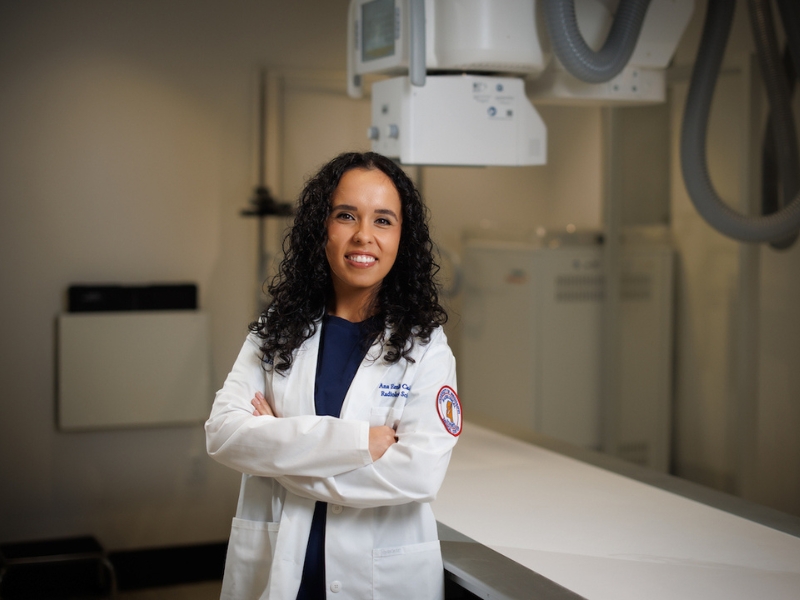
Emilia Calderon, a second-year radiologic sciences student, is preparing for a career that will put her on the front lines of patient care. Radiologic technologists perform medical imaging procedures that can help physicians detect, diagnose and monitor cancer and other diseases.
For Calderon, that work is personal. Her interest in medicine has been shaped by her own experience with an ovarian cyst and by watching her father battle prostate cancer twice.
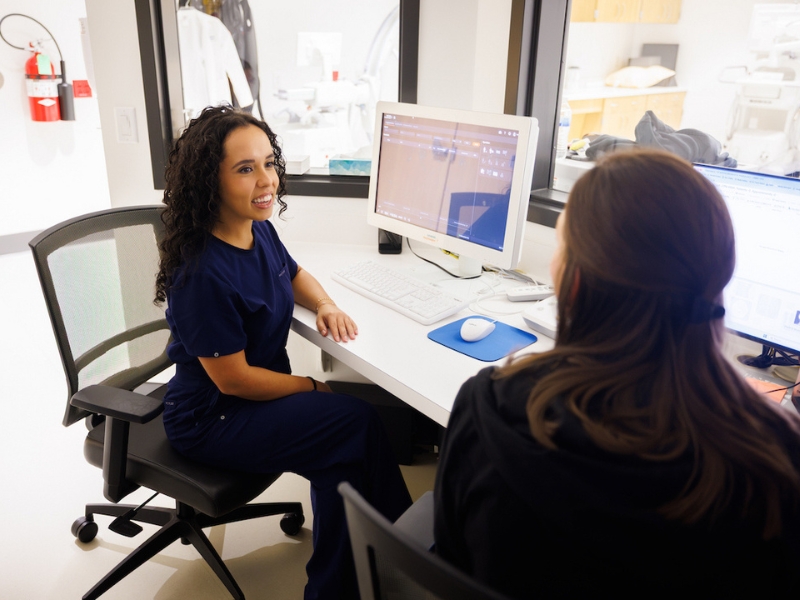
Calderon said her father was first diagnosed with prostate cancer in 2018 and underwent surgery as part of his treatment. For several years, all seemed to be well. But during a routine prostate-specific antigen blood test in 2025, doctors discovered that his PSA level had risen. He later underwent 37 rounds of radiation therapy.
"Seeing my dad and other patients go through treatment has shown me that cancer care is more than just diagnosing a disease," Calderon said. "It's also about supporting patients emotionally, helping them feel comfortable, and making sure they know they are not alone throughout their health care journey.
"As a student, I'm learning how important accuracy and attention to detail are because the images we produce can directly impact a patient's treatment plan."
While students like Calderon are learning how medical imaging contributes to cancer diagnosis and treatment, future physicians at UMMC are developing the clinical knowledge and skills needed to guide patients through those same journeys.
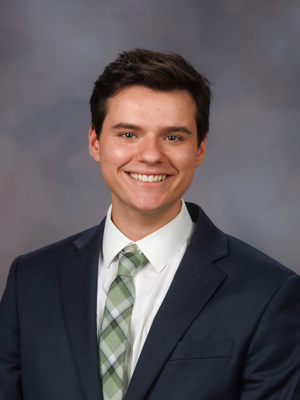
Collin Crawson, a third-year medical student, understands the emotional toll cancer can take on patients and their loved ones. His experiences have helped shape his interest in pursuing a career where he can provide comprehensive care to patients facing similar challenges.
"I know what it is like to see someone you care for in their hardest walk of life, and it has influenced me to seek out a career in which I can provide comprehensive care to patients who have walked through a similar journey to what I have witnessed," Collin said.
Through his involvement with the American Cancer Society at UMMC, Collin has also found opportunities to participate in volunteer activities, research and clinical experiences that have strengthened his interest in cancer care.
As a Mississippi native, he recognizes that preparing future physicians involves more than developing clinical skills. It also means understanding the barriers that can prevent patients from receiving timely and effective treatment, particularly in rural and medically underserved communities.
"Through my work as a medical student, I have seen firsthand how social determinants of health prove a substantial impact on Mississippians in receiving the care they need," Collin said. "Access to care, socioeconomic status, income to pay for treatments, and many other factors can heavily influence the way that cancer patients receive their medical care or even if they receive care in the first place."
For Collin, the new Cancer Center and Research Institute represents an opportunity to expand educational experiences for students while strengthening cancer care across Mississippi.
"I hope to learn as much as I can, that way, I can be a pillar in my community and a stronghold for my future patients," he said.
As students like Calderon and Collin prepare to enter the health care workforce, UMMC's commitment to developing future cancer care professionals continues through residency and fellowship training, where physicians are preparing the next generation of specialists to diagnose, treat and study increasingly complex forms of cancer.
Training the next generation of cancer experts doesn't stop with students like Calderon and future physicians like Crawson. Across UMMC, physicians are also preparing residents and fellows to take on increasingly complex roles in cancer diagnosis, treatment and research.
For Dr. Pierre de Delva, section chief of general thoracic surgery and associate program director of the cardiothoracic fellowship program, preparing future specialists is an essential part of advancing cancer care in Mississippi.
That preparation has become increasingly important as cancer treatment grows more sophisticated. In lung cancer alone, advances in molecular-based therapies, chemotherapy, immunotherapy, cancer screening and minimally invasive surgical techniques have transformed how physicians diagnose and treat the disease.
For de Delva, being a cancer physician requires understanding more than one aspect of a patient's treatment. Physicians must understand how surgery fits alongside medical oncology, radiation oncology and other specialties while building the trust necessary to guide patients through some of the most difficult moments of their lives.
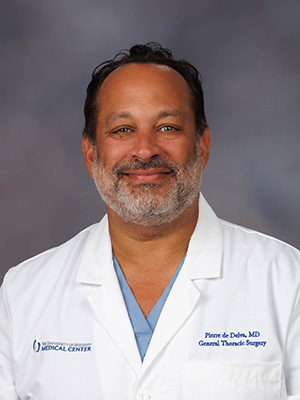
"You have to be a cancer doctor that operates, not just a technician or an operator because the care of patients has become so complex and so multidisciplinary," de Delva said. "You have to be well versed in what your colleagues are taking care of that patient for because most of your patients are going to have multidisciplinary care, and you need to understand what their options are for treatment of their cancer."
That training is particularly important in a state where cancer remains one of the leading causes of death. According to the Mississippi State Department of Health, cancer has been the state's second-leading cause of death for decades, accounting for more than 32,800 deaths from 2017 through 2021.
Prostate, breast, lung and colorectal cancers are the four most diagnosed cancers in Mississippi. During that same five-year period, cancer of the lung and bronchus — diseases that intersect directly with de Delva's specialty in thoracic surgery — accounted for 8,979 deaths, more than any other type of cancer in the state.
But the outlook for patients diagnosed with lung cancer is changing.
"The single most profound thing that's happened in lung cancer is the development of effective chemotherapy and immunotherapy options for patients," de Delva said. "It used to be that you had a diagnosis of stage two, three or four lung cancer and you are looking at less than a 50-50 chance of surviving. With stage four cancer, your chances of survival were less than five percent. Now, because of the molecular revolution, the care of lung cancer patients and personalized medicine, people with advanced stages of the disease can be cured."
Those advances carry particular significance in Mississippi, where tobacco use, low screening rates and barriers to health care access — particularly in rural communities — continue to complicate efforts to prevent, detect and treat cancer.
For de Delva, addressing those challenges means not only training physicians in the latest approaches to cancer care, but also creating an environment where patient care, research and clinical trials work together.
The new Cancer Center and Research Institute is expected to provide that environment, expanding opportunities for collaboration among clinicians, researchers, students, residents and fellows while increasing access to research and clinical trials for patients across Mississippi.
"My goal is that we will be able to make Mississippi healthier," said de Delva. "I think the CCRI will not just be a building, but an engine for providing better care. I think that care is going to be rooted not only in bedside patient care, but also in research and clinical trials. I am excited about being able to deliver excellent care and excellent research in a building that allows us to do that in a very seamless way."