


From student to successor: Morris carries Harrison’s radiology legacy forward
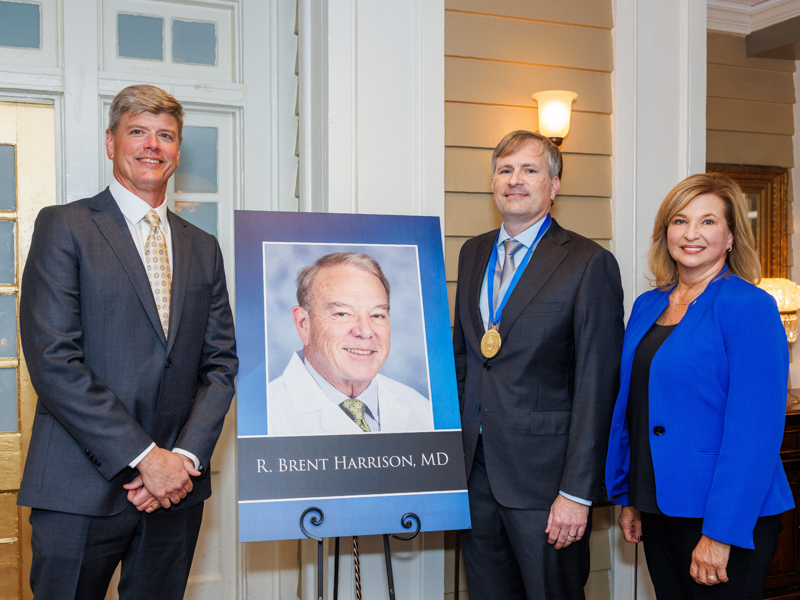
More than two decades of leadership helped Dr. R. Brent Harrison shape the future of radiology at the University of Mississippi Medical Center. Now, one of his former students has been entrusted with carrying that legacy forward.
Dr. Robert W. Morris, professor in the division of musculoskeletal imaging and chair of the department of radiology, has been named the inaugural holder of the R. Brent Harrison, MD, Endowed Chair of Radiology, an honor recognizing both Harrison’s lasting contributions to UMMC and Morris’ commitment to advancing patient care, medical education and research.
The appointment was celebrated during a ceremony at the Fairview Inn attended by UMMC leadership, members of the Harrison family and colleagues from the Department of Radiology.
Morris, a 2002 graduate of the UMMC School of Medicine, joined the UMMC faculty in 2016 after working in private practice.
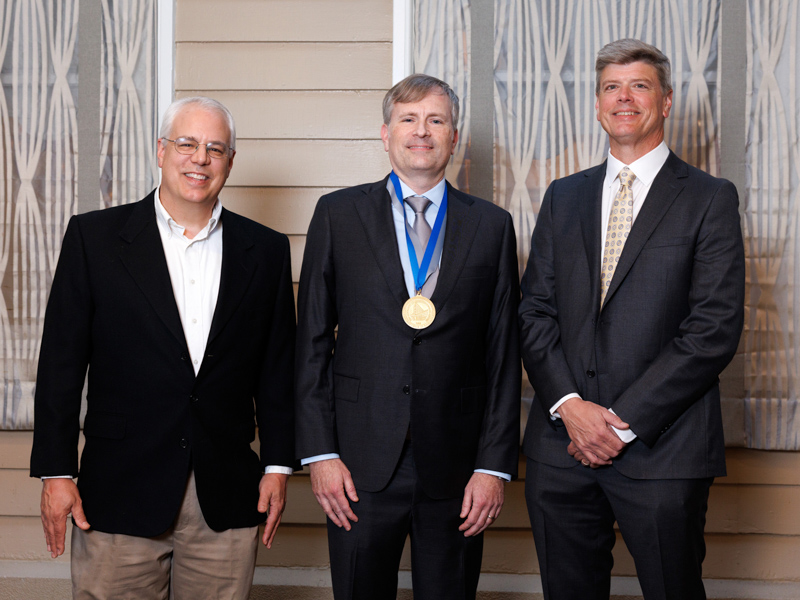
For Morris, the recognition is especially meaningful because Harrison served as a mentor and was chair of radiology during Morris’ time as a medical student. Harrison led the Department of Radiology from 1980 to 2002.
“He seemed to be a bit larger than life when I was in medical school, but he turned out to be a very nice guy, and he showed me around,” Morris said. “He showed me how to look at X-rays.”
Morris recalled that Harrison remained actively involved in the department long after his tenure as chair ended.
“Before I went away for residency and then came back, he was still on faculty here, still working. He had health problems, but he was still doing a lot of work, teaching residents and was a very valuable member of the faculty.”

Dr. LouAnn Woodward, vice chancellor for health affairs and dean of the School of Medicine, said Harrison’s contributions extended beyond the technological advancements he brought to the department. As a dedicated educator and mentor, he helped establish a culture of excellence that continues to influence the next generation of radiologists.
“Dr. Brent Harrison devoted more than two decades to UMMC as chair of the Department of Radiology and continued caring for patients long after,” said Woodward. “His legacy of leadership, service and dedication to patient care lives on through this endowed chair. Dr. Morris has also been steadfast in his service to the Medical Center, and his leadership will help carry Dr. Harrison’s legacy forward while advancing the future of radiology at UMMC.”
Meredith Aldridge, chief development officer of the Office of Development and Alumni Engagement, said endowed chairs are among the most meaningful ways donors can invest in the Medical Center’s future.

“Endowed chairs are among the most meaningful investments our donors can make in the future of UMMC,” Aldridge said. “They provide the resources needed to support innovation and education and strengthen the programs that serve our patients.”
Aldridge said the establishment of the R. Brent Harrison, MD, Endowed Chair of Radiology reflects the lasting impact of philanthropy, honoring a physician whose contributions helped shape the department while supporting its continued advancement.
“This chair is especially meaningful because it honors Dr. Harrison’s tremendous legacy while providing an investment in the continued growth and excellence of the Department of Radiology under Dr. Morris’ leadership,” she said.
Under Harrison’s leadership, the department experienced significant growth in faculty, facilities and technology, introducing services that helped usher in a new era of radiology at UMMC.
Those advancements included two interventional radiology suites, one dedicated to neuroradiology procedures; an MRI machine housed in a dedicated building; a new radiology building with three CT scanners and three MRI scanners; an addition housing one of only three open MRI scanners in the United States for neuroradiology and body interventional procedures; expanded space for the growing Division of Ultrasound; and expanded portable and emergency adult and pediatric radiology services.
“These were new technologies at the time, and his work made him well-respected, well-loved and everyone who trained with him still reveres him,” Morris said.
Much like the advancements Harrison helped usher in during his tenure, the field of radiology continues to evolve.
Morris said radiology has become so deeply integrated into modern health care that it is difficult to imagine medicine without it. That growth has expanded radiology’s role in areas such as cancer diagnosis and treatment; a role Morris expects will become even more important as UMMC moves toward opening its new Cancer Center and Research Institute.
As Morris assumes the inaugural endowed chair, the legacy Harrison built through decades of leadership, mentorship and dedication to patient care will continue to shape the Department of Radiology.
For Morris, the appointment represents more than a professional honor. It is an opportunity to carry forward the values instilled by a former teacher while preparing the next generation of radiologists to advance patient care across Mississippi. As emerging technologies, particularly artificial intelligence, continue to reshape the practice of medicine, Morris hopes to guide the department through a new era of innovation while building a legacy of his own.
“I would like to think if people look back on me 30 years from now, that I made sound decisions, guiding the department through times of change,” Morris said.