


Zika virus concern for pregnant women, but not for others
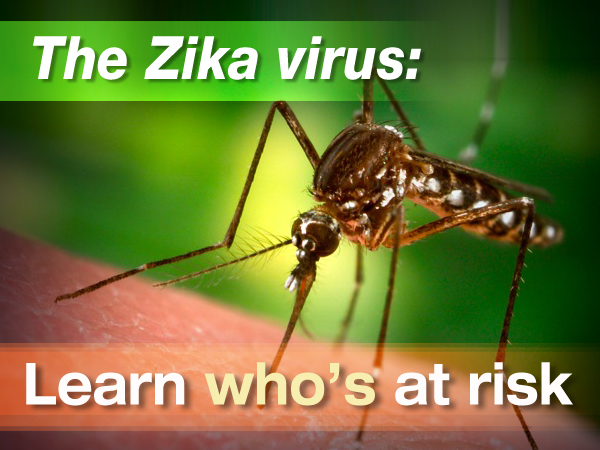
Mississippi's almost year-round mosquito population makes it more vulnerable to illnesses such as the Zika virus, which has spread rapidly in Brazil and some other South and Central American countries, a University of Mississippi Medical Center infectious diseases specialist says.

"Unfortunately, this is spread by mosquitos, and we have the vector for that here," said Dr. Skip Nolan, professor of infectious diseases and head of the Medical Center's Division of Infectious Diseases. "We likely have the Aedes mosquitos that can transmit the virus."
The Zika virus usually causes either no symptoms or mild effects such as a rash, low fever or joint pain; 80 percent of people infected do not know it. But in pregnant women or those attempting to become pregnant, it can be catastrophic for their babies. It has been linked to a spike in babies born with microcephaly, a condition characterized by an underdeveloped brain and small head that can cause severe neurological issues and sometimes death.
However, there is no need to panic about the virus making national and international headlines, Nolan and Dr. Michelle Owens, associate professor in the Department of Obstetrics and Gynecology and a maternal-fetal specialist, said. There have been no confirmed deaths from the Zika virus in this country or internationally. Cases have appeared in parts of Central and South America and the Caribbean.

"There's still a lot we don't know, so we have to be very careful about making any absolute predictions," Dr. Anthony Fauci, head of the National Institute of Allergy and Infectious Diseases, was quoted as saying by National Public Radio. He added that it is unlikely the United States will see widespread outbreaks.
Even so, federal agencies are intensifying efforts to combat Zika. "Right now, the concern is that it could spread to Mississippi and be a threat to pregnant women," Nolan said.
There is not a high likelihood that Mississippi would experience an outbreak, Owens said. "The virus does not live in all mosquitos, but rather in certain types. However, there is a possibility because of our diverse population and travel that we might see patients who have been in an area where the virus is more common."
Dr. Paul Byers, deputy state epidemiologist at the Mississippi Department of Health, said there have been no travel-associated cases in the state, "but we are working with local providers to identify any possible cases."

"Currently, only those Mississippians who travel to countries where there is ongoing local transmission are at risk for infection," Byers said.
The World Health Organization has warned that the virus is spreading rapidly, with millions of potential cases across the Americas. The Centers for Disease Control and Prevention reports Zika is present in more than 20 countries.
The virus spreads when a person is bitten by an infected mosquito. If that person is later bitten by another mosquito, the insect can become infected and transmit the virus to others.
In Mississippi, Nolan said, the threat of mosquito-borne illness, including West Nile virus, can begin in a person's own backyard. Mosquitos can breed in very small amounts of standing water, such as in discarded containers or flower pot trays.
"You need to dump the water out of containers and keep them dry," Nolan said. "Make sure, the best you can, that mosquitos are not breeding where you are." He also recommends using insect repellent with DEET and wearing long sleeves during peak mosquito activity.

UMMC's Department of Obstetrics and Gynecology plans to educate front-line staff and providers "to be aware of what to look for and to develop an action plan," Owens said. "It's really more about heightening awareness and allaying the public's fears. We want to make sure patients and providers get appropriate information."
She and the Department of Health advise pregnant patients considering travel to areas with Zika cases to postpone trips if possible. If travel cannot be avoided, patients should take precautions to prevent mosquito bites.
The Mississippi Department of Health has posted updated information about the Zika virus on its website, including a map of affected countries, travel precautions and guidance for pregnant women.
The medical community has known about the Zika virus since 1947, but it had received little attention until recently.
"If a disease is not a major issue in spreading and killing people, there's not much interest in investigating it," Nolan said. "A month ago, Zika was a nonentity."
Scientists may begin human trials of a Zika vaccine as early as this year, but a widely available vaccine could take years to develop.
Unlike some affected regions, "we have good public health, and we can contain it," Nolan said. "The most important thing is for physicians to recognize potential cases and notify the Health Department so it can investigate and help prevent the disease from spreading."