


UMMC named among nation’s top performing hospitals for heart attack treatment

The University of Mississippi Medical Center has received the American College of Cardiology’s National Cardiovascular Data Registry Myocardial Infarction Registry Platinum Performance Achievement Award for 2026.
This national recognition is awarded to hospitals that consistently provide high-quality, guideline-based care to patients experiencing heart attacks. UMMC is one of only 350 hospitals nationwide to receive the honor this year.
The 2026 award marks the fourth consecutive year UMMC has earned the national recognition, reflecting the Medical Center’s continued commitment to providing timely, coordinated care for heart attack patients.
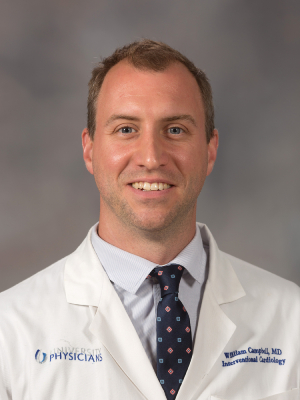
“Earning the Platinum achievement award over the last four years proves we continue to provide our heart attack patients with an efficient system of care that yields excellent outcomes,” said Dr. William Campbell, director of the Adult Congenital Heart Disease Fellowship Program.
“Our heart team works together to treat heart attack patients quickly and safely. We have a weekly multidisciplinary team meeting that includes interventional cardiology, emergency medicine, ambulance services and Mississippi MedCom where we evaluate every single ST-Elevation Myocardial Infarction activation for quality and systems improvement.”
That coordinated approach is especially significant in Mississippi, where heart disease remains a major health concern. According to the Mississippi State Department of Health, Mississippi is among the states with the highest rates of heart attack and stroke deaths in the nation. Physicians say risk factors including obesity, smoking, poor diet and physical inactivity contribute to heart disease development earlier in life among Mississippians.
More than 8,000 Mississippians die from heart disease each year, according to the Mississippi State Department of Health, underscoring the importance of quickly identifying and treating patients experiencing a heart attack.
“We do this because every hour delay of care of this most serious type of heart attack increases mortality by 8% per hour,” said Campbell. “Early activation in the field, bypassing the Emergency Department completely when able, eliminating barriers to timely transfer and efficient communication through our mobile system are some of the ways we minimize damage to our patient's heart muscle.”