


UMMC launches new lifesaving heart, lung program for adults and children
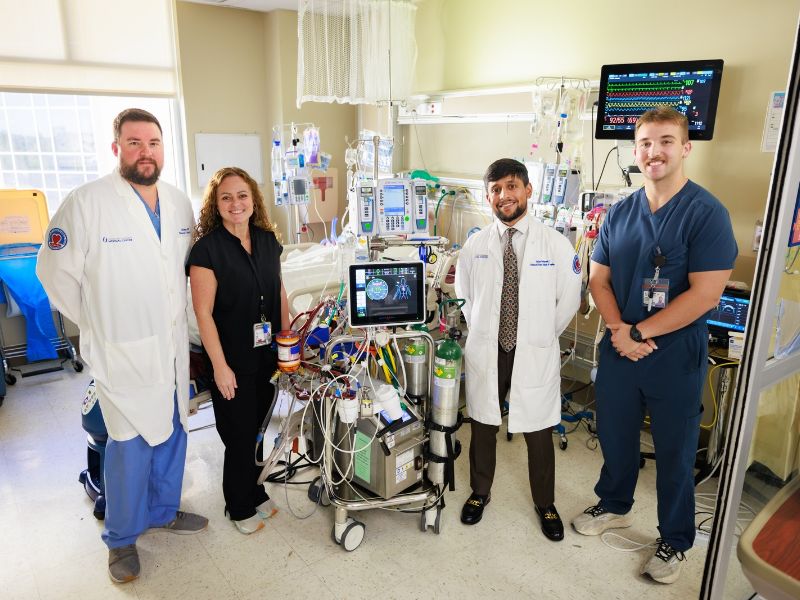
When those vital organs begin to fail, an advanced form of life support can provide critically ill patients with something they desperately need: time.
At the University of Mississippi Medical Center, a team of physicians and health care professionals is using extracorporeal membrane oxygenation, also known as ECMO, to provide lifesaving support to some of the state's most critically ill patients.
UMMC is Mississippi's only hospital operating an ECMO program for both adults and children, offering a specialized level of care for individuals experiencing severe cardiac and respiratory failure.
Equipped with five ECMO machines, the Medical Center's program supports patients facing a range of medical emergencies, including heart attacks, heart failure, traumatic injuries, complex cardiothoracic surgeries, obstetric emergencies and severe respiratory illnesses such as influenza and COVID-19.
Unlike conventional life-support treatments, ECMO temporarily performs essential functions of the heart, lungs or both, allowing those organs time to recover while physicians address the underlying medical condition.

"We are taking patients who otherwise would be dead and giving them a great chance of survival," Sabharwal said.
Giving the heart and lungs time to heal
ECMO provides temporary support through two primary methods: veno-venous (V-V) ECMO, which supports lung function, and veno-arterial (V-A) ECMO, which supports both the heart and lungs. UMMC provides both options.
With V-V ECMO, blood is removed from a patient's veins and circulated through a specialized device called a membrane oxygenator. The device adds oxygen to the blood and removes carbon dioxide before returning the oxygen-rich blood to the patient's veins.
V-A ECMO works similarly but returns oxygenated blood through an artery, providing both respiratory and circulatory support. By temporarily taking over these essential functions, the technology allows the heart and lungs an opportunity to rest and recover.
For patients experiencing severe respiratory failure, V-V ECMO can offer an alternative when mechanical ventilation alone is not enough or when continued ventilation could cause additional lung injury.
"Ventilators may not be doing enough, or it may be hurting them," Sabharwal said. "When we breathe, the pressure in our chest is negative – so air just comes in by itself. The ventilator is positive pressure. Ventilators hurt the lungs, and for patients with sick lungs, you are blowing all of this air in. What ECMO does is allow you to turn off the vent so the lungs can actually rest and get better."
While mechanical ventilators deliver air into the lungs through positive pressure, ECMO adds oxygen to the blood outside the body. This can allow physicians to reduce ventilator settings and minimize additional stress on already damaged lungs.
Another advantage of ECMO is the potential for patients to remain awake and participate in physical activity during treatment.
For 19-year-old Colin Hitch, ECMO became a lifeline after a serious motor vehicle wreck left him critically ill and in need of advanced life support.
On April 11, Hitch, a Clarksville, Tennessee native, was involved in a collision after leaving an event at Mississippi State University.
The MSU student remembers little about the wreck that would change his life forever. But for his mother, 47-year-old Kelly Hitch, every detail of that fateful day remains vivid.
"We got the phone call around midnight after being notified by his girlfriend that he had not come home," Kelly said.
"After she used Find My app on her phone to locate him, she arrived at the scene. Officers told her that he had already been taken to UMMC. Police had his phone but could not get into it to call us."
Initially, Kelly's husband planned to make the six-hour drive to Jackson alone. However, after receiving a call from a nurse who gave him a grim prognosis, he returned home, picked up Kelly and their 12-year-old son, and the family headed to Jackson.
"That was probably the longest six-and-a-half-hour drive ever. We did not know what we were walking into, but we were getting the updates that he had been in and out of surgery," she said.
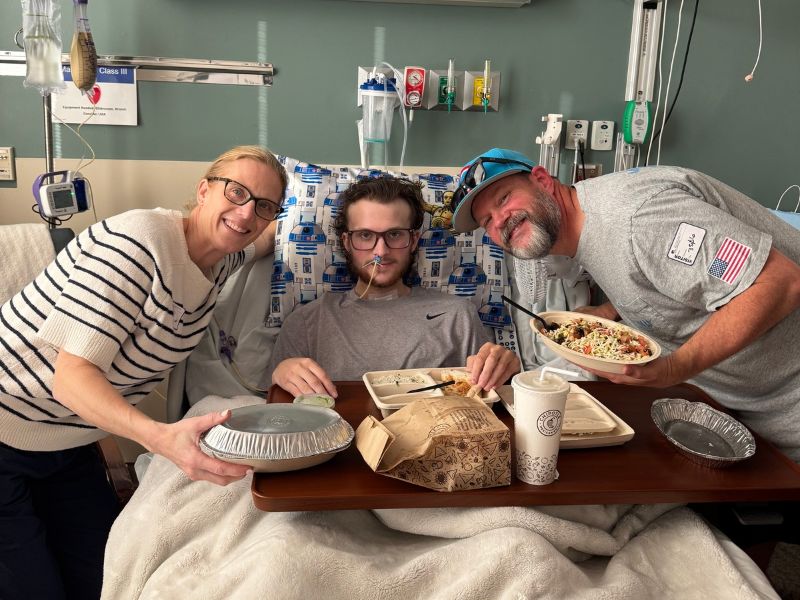
After his initial surgery, Colin appeared to be doing well. But before his condition could improve, his health took a downward turn.
Following abdominal surgery, Colin developed pneumonia and a collapsed lung. As his oxygen levels continued to drop, doctors spoke with Kelly and her husband and made the decision to place him on ECMO to save his life.
"I remember walking into the room one morning to check on Colin before he went on ECMO and he was so gray," Kelly said. "I could tell he was not getting enough oxygen to his body. We really didn't get to see him before he got on the machine. I just remember me and my husband Jim walked out to the car and just sat in the car and cried, we just held each other and cried."
Through tears and prayers, Colin's condition began to improve within 24 hours. Kelly said color was returning to his face, marking the beginning of his recovery.
"We were gowning up and gloving up every five seconds, but it gave his body the time he needed," she said.
Colin spent eight days on ECMO and 48 days at UMMC before returning to Tennessee, where he continued his recovery through physical therapy and additional medical treatment.
He remains enrolled at Mississippi State University as an online student, pursuing a double major in international business and Spanish.
Although the road to recovery remains long, Colin said the traumatic experience strengthened his faith in God and reminded him that healing is a marathon, not a race.
"It is always going to be a process, and you have to just keep going at it," Colin said. "Never back down from the fight.
"You can't think of what you can't do,. You have to think of what you can do."
Unlike patients who require deep sedation while receiving mechanical ventilation, some patients receiving ECMO can remain alert, communicate with their care teams and participate in supervised rehabilitation, depending on their medical condition.
According to Sabharwal, there is no universally established maximum duration for ECMO treatment. The length of time a patient remains on the machine depends on the severity of the patient's illness, their response to treatment and the recovery of their heart or lungs.
For 61-year-old Jerry Maddox, ECMO provided critical support after he experienced acute rejection of his transplanted heart, resulting in severe heart failure. Despite the severity of his condition, Maddox maintained a positive outlook, which became an important part of his recovery.
A barbecue connoisseur and Port Gibson native, Maddox first came to UMMC in 2016 after experiencing problems with his defibrillator. His fiancée, Glenda Callahan, took him to the nearest hospital to their home in Vicksburg, where physicians determined he needed a heart transplant.
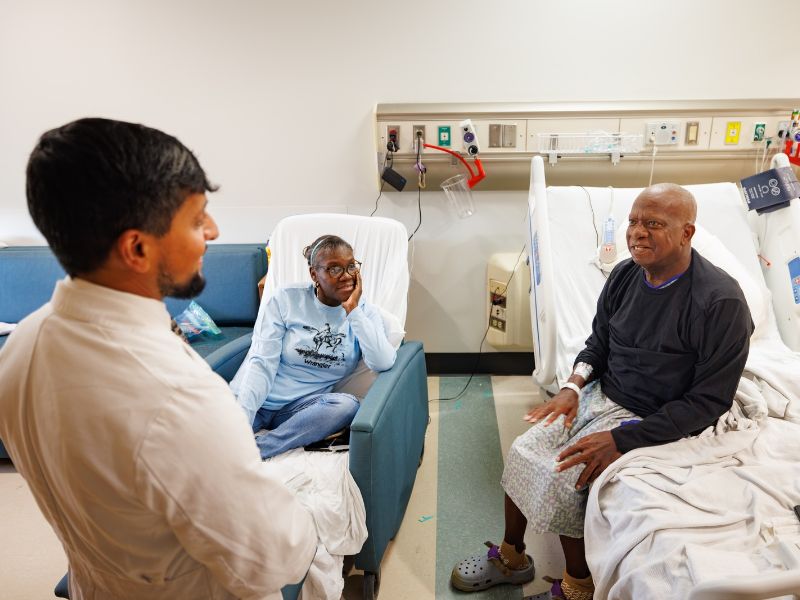
Maddox received his transplant at UMMC in 2018 and remained in good health for several years. However, after missing a week of his anti-rejection medication, he experienced severe heart failure. He was treated for acute rejection and placed on ECMO.
Within 24 hours of being placed on the machine, Maddox was awake, eating and communicating with family and friends, Sabharwal said. His recovery progressed quickly, and he was discharged home.
Maddox said maintaining a positive mindset helped him navigate the difficult moments of his recovery.
"You are going to get those moments where you feel like the walls are closing in on you, but you need something to keep your spirits up," Maddox said. "I am never down about anything."
Expanding access to lifesaving technology
Although ECMO has become an established treatment option for certain critically ill patients, Sabharwal believes greater awareness and earlier access to the technology could improve outcomes across Mississippi.
While some states perform hundreds of ECMO procedures annually, Mississippi has performed approximately 30 cases this year, according to Sabharwal.
He attributes part of that difference to misconceptions about the technology's effectiveness and limited awareness of when ECMO may be appropriate.
For Sabharwal, changing those perceptions begins with helping physicians recognize when a critically ill patient may benefit from ECMO before their condition deteriorates further.
According to figures provided by Sabharwal, national survival rates are approximately 60% for patients receiving V-V ECMO and 49% for those receiving V-A ECMO.
Sabharwal said UMMC's reported survival rate has exceeded national benchmarks over the past six months.
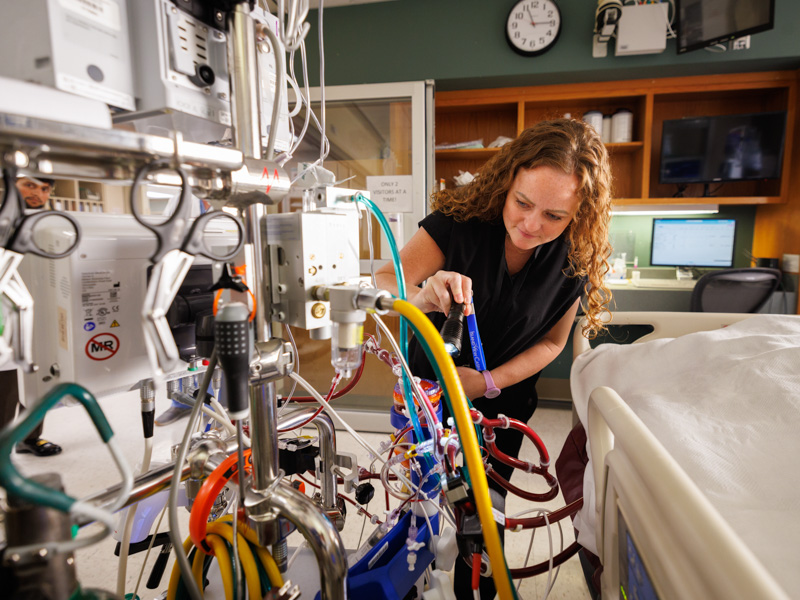
At UMMC, a multidisciplinary team of nine specialists evaluates patients to determine whether ECMO is an appropriate treatment option. The decision involves assessing each patient's medical condition, the severity of organ failure and the likelihood that advanced support could improve their chances of recovery.
As UMMC continues to expand its ECMO program, Sabharwal hopes to increase awareness among health care providers across Mississippi about the importance of identifying critically ill patients who could benefit from advanced life support.
For Sabharwal and the multidisciplinary team, the mission extends beyond providing lifesaving technology. It is about ensuring that Mississippians facing life-threatening medical emergencies have access to specialized care when they need it most.