


UMMC transforms rare disease diagnosis and care through collaboration
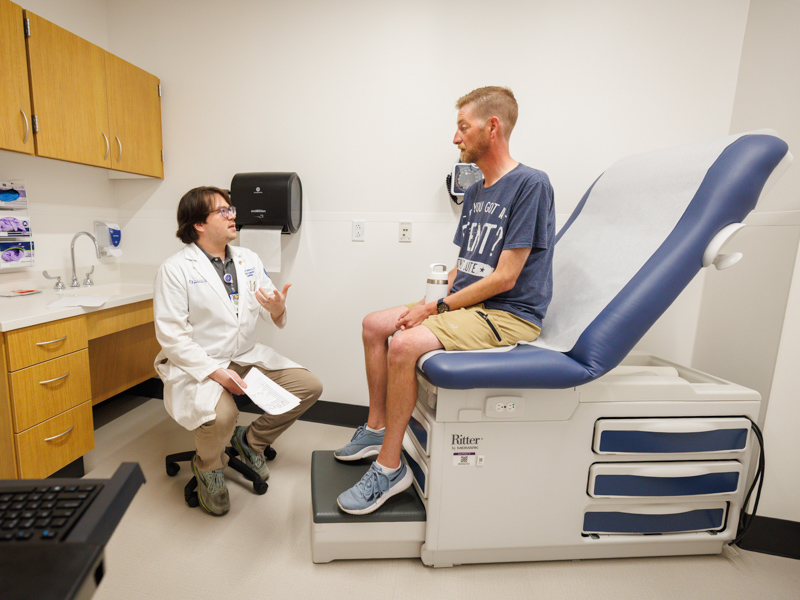
About one in 10 people in the U.S. lives with a rare disease, and roughly 80 percent of those conditions have an underlying genetic cause, according to the National Organization for Rare Disease. Many affect multiple organ systems, making diagnosis and treatment difficult.
For patients and families, the journey to answers can take years. At the University of Mississippi Medical Center, that exhaustive journey called a “diagnostic odyssey” is being reimagined.
Through two innovative efforts – the genomic testing program Project Baby Magnolia and the newly established multidisciplinary Barth Syndrome Clinic – UMMC is accelerating diagnoses, expanding access to advanced genomic testing, and building a coordinated care model designed to improve outcomes for some of the most medically complex patients.
For Laura Godfrey Hendon, a licensed certified genetic counselor and associate professor of pediatrics and obstetrics-gynecology, the programs are part of a single, larger mission in the rare disease ecosystem.
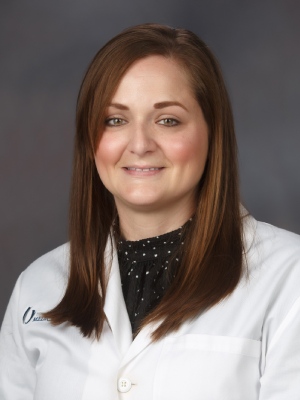
“Without a diagnosis, these individuals are adrift in a vast sea of confusion, frustration and potentially poor outcomes,” she said. “Researchers have the tools to design treatments – even cures – but they need clinicians to connect them with patients. That relationship is what moves the field forward.”
While Project Baby Magnolia drives discovery, the Barth Syndrome Clinic represents what happens after a diagnosis is made.
Multidisciplinary Barth Clinic – the only one of its kind in the Southeast – addresses a critical gap in access to coordinated care for patients with rare diseases. Rather than requiring families to travel between multiple specialists over weeks or months, UMMC brings the care team together in a single, integrated visit.
Patients are evaluated by experts in cardiology, genetics, physiatry, nutrition, endocrinology and other specialties – all in one day.
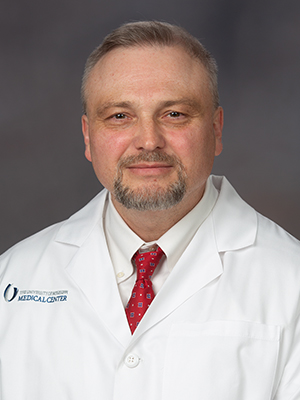
“The providers are not functioning in isolation,” said Dr. Pawel Pomianowski, director of the Division of Adult Genetics. “They’re reviewing the same information, seeing the same patient, and then coming together to develop a unified care plan. That’s when care becomes truly integrated.”
The clinic focuses on Barth syndrome, a rare inherited mitochondrial disorder caused by mutations in the TAZ, or Tafazzin, gene. The condition affects energy production in cells and can impact the heart, skeletal muscles, metabolism, the immune system and growth.
Because of its complexity, patients often experience a wide range of symptoms – from cardiomyopathy and muscle weakness to fatigue, feeding difficulties and immune deficiencies. These require coordinated, multidisciplinary management.
Project Baby Magnolia, or PBM, focuses on the earliest – and often most critical – window: the first days of life. The initiative provides critically ill newborns with access to two of the most advanced genomic technologies available – whole genome sequencing and optical genome mapping at no cost to families.
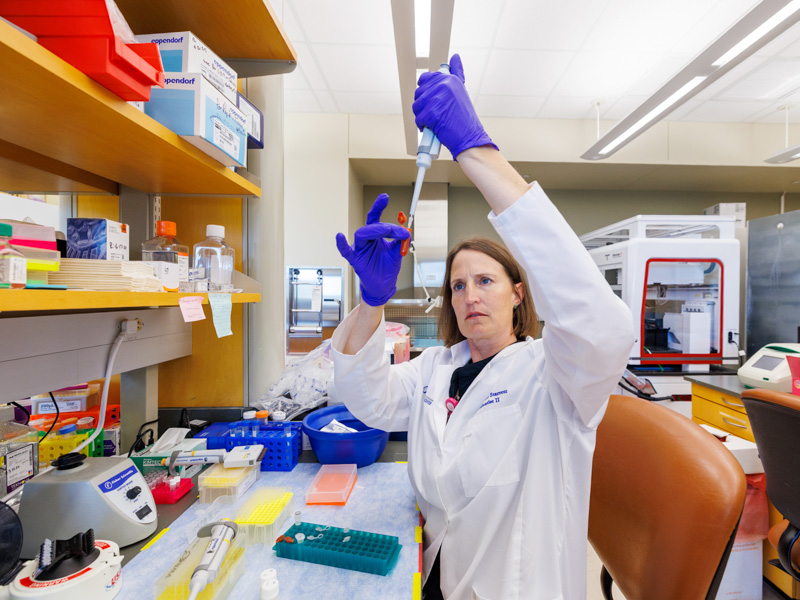
Before PBM, families of children with unexplained symptoms have navigated a maze of specialists, inconclusive tests and unanswered questions for decades. UMMC’s approach aims to shorten that journey dramatically.
Testing can begin within 24 hours of birth.
“The quicker genetic testing is performed, the quicker a potential diagnosis may occur,” Hendon said. “For some rare diseases, even a few days can make a significant difference in long-term health and neurodevelopment.”
The program is already revealing conditions that would have gone undetected using conventional methods. In one case, clinicians identified a rare genetic inversion that standard testing likely would have missed. Researchers in the Department of Cell and Molecular Biology and the Molecular Center of Health and Disease are now developing an animal model to better understand the condition – work that could lead to improved diagnosis and treatment for future patients.
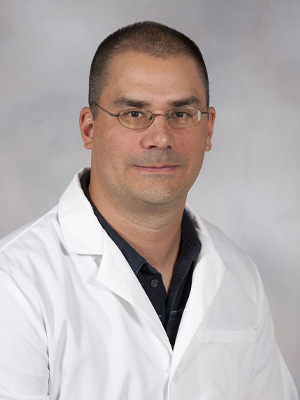
"Close collaboration between clinicians and scientists has been absolutely essential for the success of the PBM program, which was the vision imagined by my predecessor Dr. Michael R. Garrett," said Dr. D. Ashley Robinson, professor and interim chair of the Department of Cell and Molecular Biology, director of the Molecular and Genomics Core Facility, and principal investigator of the PBM project.
"It is truly inspiring to see the entire team in action, from working with the patients and their families, to processing samples with cutting-edge genomic technology and some of our most powerful computers, all being done to reveal the genetic cause of a baby's undiagnosed disease," Robinson said.
Advances in genomic technology are also reducing turnaround times. Results that once took up to 15 weeks can now be delivered in as little as two to four weeks – and, in urgent cases, within five days.
Beyond diagnosis, PBM creates a direct pipeline to specialized care – connecting patients to disease-specific clinics like UMMC’s multidisciplinary Barth Syndrome Clinic.
At the Barth clinic, a new model of coordinated care brings multiple specialists together in a single clinic visit and eliminates traveling long distances. Patients begin the day with cardiac imaging and laboratory testing, followed by consultations with genetics, cardiology, nutrition and other specialists in the afternoon. At day's end, the care team reconvenes to review each case and develop a unified, personalized treatment plan.
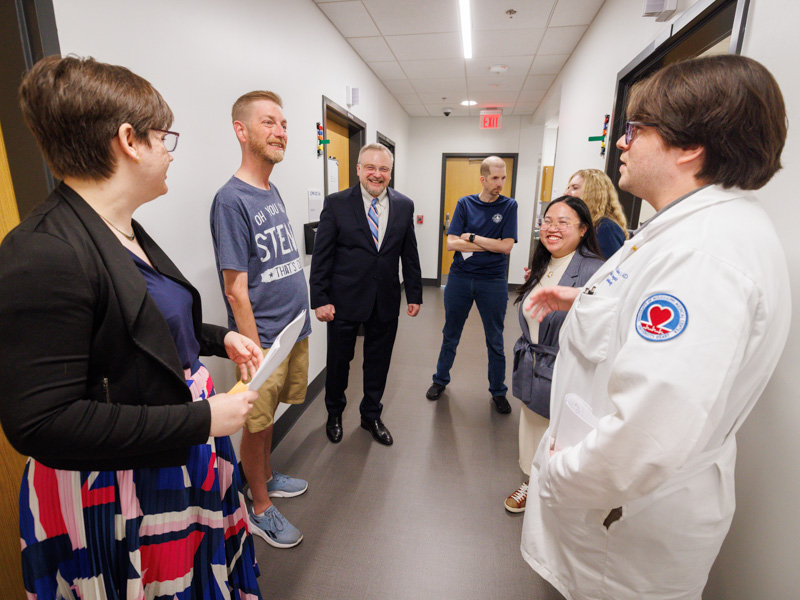
“This model allows us to identify connections that might otherwise be missed,” Pomianowski said. “A nutrition issue might affect rehabilitation. A cardiac concern may change physical activity recommendations. A family history may prompt additional genetic counseling or cascade testing. For Mississippi patients and others throughout the Southeast, it’s not simply more convenient care, it’s more comprehensive care. It’s all interconnected.”
Historically, individuals with rare diseases have had limited opportunities to receive coordinated, specialized care close to home. UMMC’s program changes that, while also addressing one of the most vulnerable points in rare disease care: the transition from pediatric to adult services.
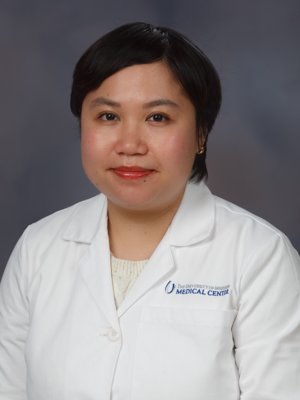
“Barth syndrome is a lifelong condition,” said genetic counselor Phuc Thi Hong Do, an assistant professor involved in building the clinic. “Patients don’t stop needing care when they become adults. Ensuring continuity across that transition is critical.”
She added, “The clinic serves a rare disease population that has historically had limited access to coordinated expertise, making UMMC a leader by filling an important gap in the region. The goal is for patients to walk into a space where the team already understands the condition, understands why the care needs to be coordinated, and is thinking about the whole picture.”
Furthermore, Thi Hong Do hails collaboration with other national institutions, including the Mayo Clinic.
UMMC’s efforts extend beyond patient care. The institution is also working to strengthen the pipeline of specialists in medical genetics – a field that faces a nationwide shortage.
Currently, there are an estimated 900 clinical geneticists in the United States, or roughly 2.2 per million people, according to NORD. Mississippi, with nearly 3 million residents, has only two civilian medical geneticists, Dr. Paulo Borjas and Dr. Pomianowski – both at UMMC.
“Every type of physician needs a foundation in genetics,” Hendon said. “But medical genetics remains one of the least-filled specialties in the country.”
UMMC leaders hope their work will inspire more students to enter the field by demonstrating both its scientific potential and its profound impact on patients’ lives.
At its core, the rare disease initiative is about more than technology or infrastructure. It is about people.
“At the heart of all this work, patients and their families are the center of everything we do,” Hendon said. “Our goal is for every rare disease patient to receive a diagnosis – and one day, a treatment or cure.”
Pomianowski sees the effort as a foundation for something even larger.
“We’re not just treating individual patients,” he said, “we’re building systems of care, training providers, and creating models that can be replicated. This is an opportunity to transform rare disease care for Mississippi and beyond.”