


From saddle to science: Horseman conducts drug addiction research

Long before Rian Young was studying how sleep influences addiction in a University of Mississippi Medical Center laboratory, he was performing surgeries of a different kind.
His patient was a broken toy horse.
As a little boy, Young carefully taped and glued the fractured leg until it was “healed,” convinced that every animal – even a plastic one – deserved another chance.
That instinct never left him.
Today, the UMMC research assistant in the Department of Psychiatry and Human Behavior spends his days in a laboratory, where he helps investigate how insufficient sleep contributes to methamphetamine addiction and relapse. The work may one day lead to treatments that address substance use disorders and sleep problems that often accompany them.
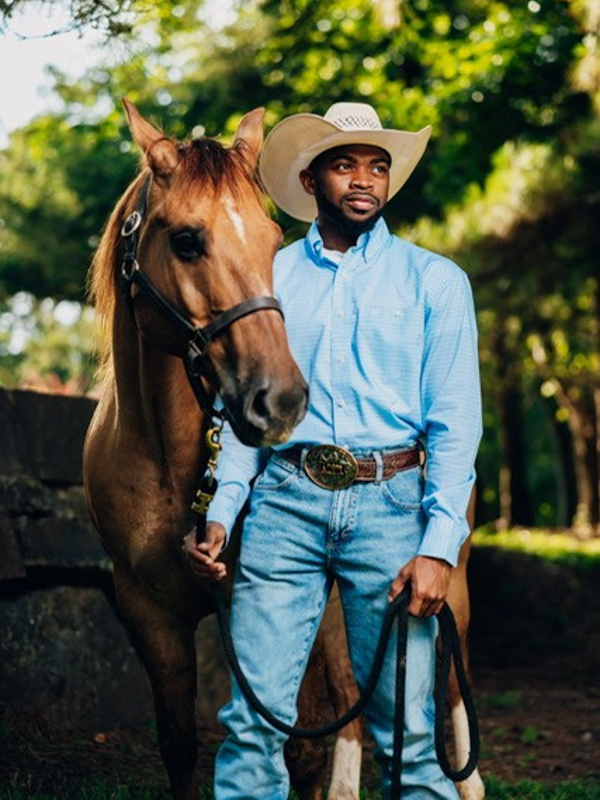
Yet when the workday ends, Young is just as likely to be found at a barn, in the saddle of one of the horses he rides, walking his dog Lieutenant Dan along the Ross Barnett Reservoir or caring for animals that continue to shape the veterinarian he hopes to become.
“I can't remember the exact moment I fell in love with animals,” Young said. “It feels like they've always been a part of who I am. Ever since I was little, I've been fascinated by them. I was always happiest when I was surrounded by animals, and that fascination has grown only stronger over the years. Caring for them has never felt like something I had to do; it's always been something that came naturally because of how deeply I love them.”
That lifelong fascination became a calling.
Growing up, he fed stray animals whenever he could and dreamed of becoming a veterinarian. His bachelor's degree in animal and dairy sciences from Mississippi State University, earned in 2023, strengthened that ambition through hands-on training with faculty and extension specialists who prepared him for clinical practice and scientific research.
“The experiences have strengthened my confidence and inspired me to continue pursuing my future career goals,” he said.
After spending eight years as a veterinary technician, Young had accumulated extensive clinical experience before applying to veterinary school.
What he lacked was research.
Seeking to broaden his experience, Young accepted a position in psychiatry – a career move that might seem unusual for someone devoted to animal medicine.
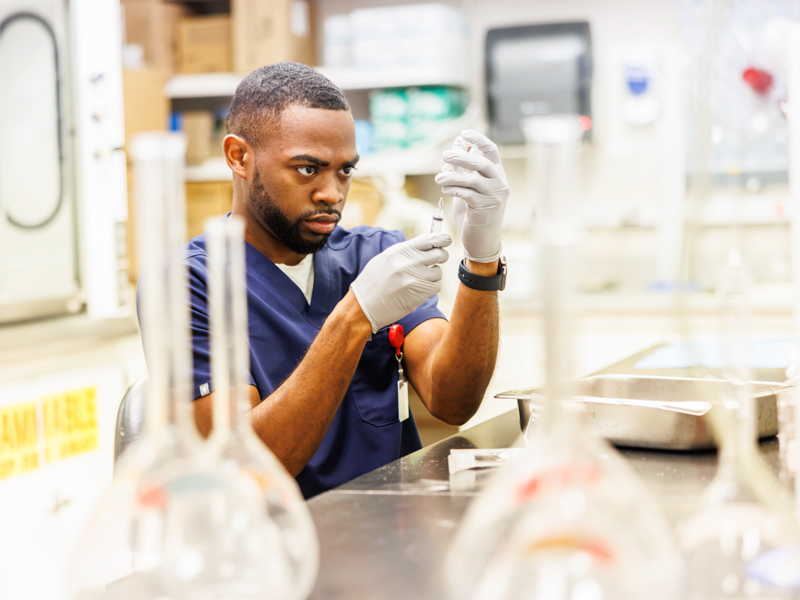
Specifically, Young works in the laboratory of Dr. Lais F. Berro, an assistant professor in the Department of Psychiatry and Human Behavior. Berro said Young's strong veterinary background in animal biology has provided a solid foundation for his growth into a confident and increasingly independent researcher.
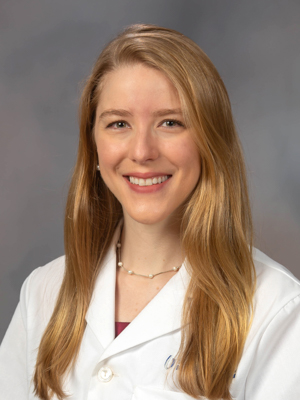
“His training has sharpened his observational skills and allowed him to recognize subtle changes in animal behavior and health while approaching research with curiosity, care and an understanding of its ethical responsibilities,” Berro said.
“His kindness, compassion, professionalism and attention to detail also make him a valued member of the research team,” she said.
For Young, the connection between psychiatry research and veterinary medicine made perfect sense.
“I wanted to be exposed to research, particularly preclinical animal research,” he said. “Behavioral pharmacology gave me that opportunity.”
In Berro's laboratory, researchers investigate an important but often overlooked question: Does poor sleep increase the likelihood of drug addiction – and make relapse more likely?
Their studies examine whether a history of insufficient sleep increases methamphetamine use and whether a brain signaling network known as the orexin system plays a role. Understanding that relationship could eventually lead to medications that improve both sleep and recovery from addiction.
“Sleep isn't just a symptom that's affected by drug use,” Young said. “It actively influences brain function, decision-making, emotional regulation and the likelihood of relapse.”
That realization has changed more than his understanding of addiction.
“It's made me pay extra attention to my own sleep habits,” he said.
Young sees surprising similarities between working with horses and conducting scientific research.
Training a horse isn't about force. It's about patience.
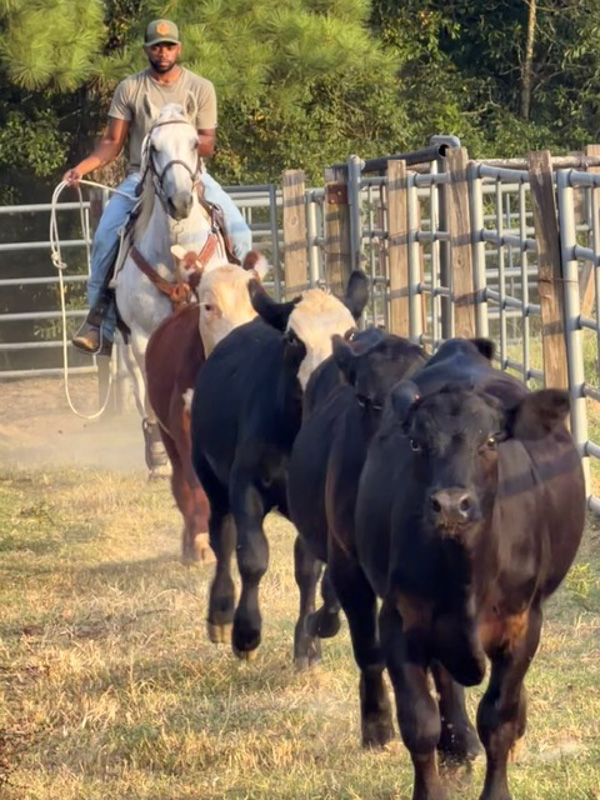
“Horses genuinely want to please us. They look to us for guidance and trust us to clearly communicate what we expect. Horses have taught me that patience, consistency and careful observation are far more effective than force or rushing.”
Young said those same principles guide successful researchers.
“Good science requires patience because meaningful discoveries rarely happen overnight.”
Young still envisions his future in a mixed-animal veterinary practice with an emphasis on emergency medicine.
Research hasn't changed that dream. It has expanded it.
Working alongside scientists has shown him that veterinary medicine extends far beyond clinical practice and includes opportunities to improve animal and human health through discovery.
“I hope to become a veterinarian that people trust with the health and well-being of their animals while continuing to expand my knowledge through research and lifelong learning,” he said.
That focus in the laboratory is balanced by the animals that remain at the center of Young's life.
Ask which one has left the deepest impression, and he doesn't hesitate.
“My dog, Lieutenant Dan,” he said proudly. “Just to see how much he really loves and chooses me every day reminds me that I have a place within this career field.”
When he's not at UMMC or spending time with his animals, Young enjoys kayaking, bowling, going to church and the gym, traveling and spending time with family and friends.
Ten years from now, he hopes his patients may include everything from horses and cattle to family pets arriving for emergency care.
Regardless of where his career leads, his goal remains unchanged: to improve animal and human lives through compassion, service and unwavering dedication.
And despite the research projects, the horses and his aspirations to become a veterinarian, Young hopes something more fundamental defines how others remember him.
“I want to be remembered as someone who is selfless, God-fearing and deeply devoted to improving the health and well-being of animals while ensuring their owners feel supported and grateful,” he said. “I hope my dedication, strong work ethic and compassion speak louder than words ever could.”