


Bench-to-bedside care catches cancer risk for Mississippi family

A family prayer began a weekend family get-together for Rhonda Cooley and her husband Jerry, her sister Gina and their children, grandchildren and great-grandchildren.
Thanks were given for the cookout meal, the hands that prepared it and for life itself. When Rhonda Cooley underwent genetic testing as part of her endometrial cancer treatment at the University of Mississippi Medical Center, potentially 16 lives were saved.
Those tests revealed that Cooley had a mutation in her RET gene, which prevents cancer when working properly.
“After I was tested, my siblings, children, grandchildren – everyone got tested,” said Cooley, of Ellisville. Sixteen of her family members tested positive for the gene mutation, and five were found to have medullary thyroid cancer, including Rhonda, Gina Warren, Rhonda’s children Heather Young and Shane Cooley, and Heather’s daughter Kelsey Branch. They and two other family members have opted to have their thyroids removed, and others found to have the mutation are monitoring their health.
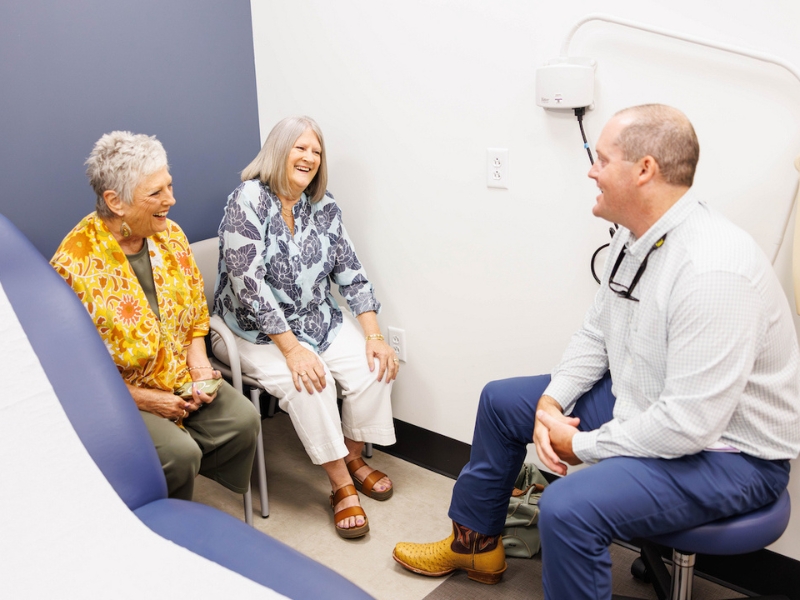
“I am 72 years old,” she said. “I could have lived out my life, but these little ones, including one as young as 3, have their whole lives ahead of them. This could have really caused them problems.”
Children found to have the mutation range in age from 13 to 3.
Cooley had 49 lymph nodes removed. Nine of them showed medullary thyroid cancer that had spread. Her treatment for medullary thyroid cancer included surgery to remove her thyroid.
After a thyroidectomy, lifelong thyroid hormone replacement therapy is required.
Bethany Sabins, a nurse practitioner in gynecological oncology, recommended genetic testing to Cooley.

“New endometrial cancer guidelines recommend genetic testing for anyone with that diagnosis,” she said.
Finding Cooley’s mutation led to testing her siblings, children and grandchildren as well as her own thyroid cancer diagnosis, which was unrelated to her endometrial cancer.
“If I can prevent you from becoming a cancer patient through prevention or spotting cancer early through genetic testing, then I have done my job,” she said. “Genetic testing is well worth it.”
The RET gene provides instructions for producing a protein that is involved in signaling within cells. RET mutations can lead to medullary thyroid cancer.
The thyroid, a butterfly-shaped gland at the front of the throat, controls metabolism, bone growth, brain development, heart rate, digestion, muscle function, body temperature and more.
Thyroid cancer is common, but medullary thyroid cancer is rare, making up about 4% to 10% of all thyroid cancer cases. Of those medullary thyroid cancer diagnoses, up to 25% are related to inherited RET gene mutations. Those with the mutations can prevent the cancer by having the thyroid gland removed.
RET mutations can result in a lifetime likelihood of having medullary thyroid cancer of up to 100%, depending on age.
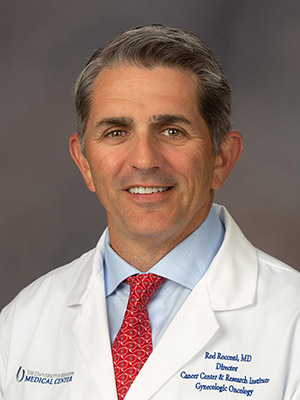
The benefit of having multiple different specialties all working together to give a comprehensive opinion could only be found at an academic center like UMMC, said Dr. Rod Rocconi, Ergon Chair for Cancer Research and CCRI director.
“Cancers are complex, with multiple related conditions that require expert treatment,” he said. “CCRI has access to the depth of expertise that an academic medical center can provide, bringing surgeons, medical oncologists, geneticists, pathologists and research scientists together to guide each patient’s care.”
Every cancer is a genetic disease, said Dr. Pawel Pomianowski, director of the Division of Medical Genetics and Genomics.
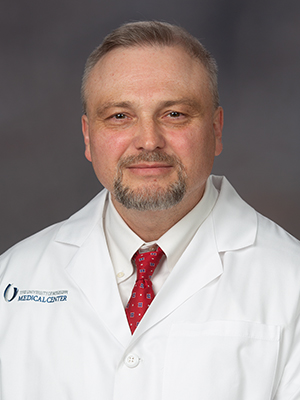
“Genetic testing is critical for cancer patients to have since it gives cancer patients and their care teams crucial information about which treatments will be most effective and what challenges they may face during care,” he said. “Because gene mutations can run in families, it’s important to test family members, and the sooner the better.”
Sabins encourages cancer patients to undergo genetic testing for better screening, diagnoses and care.
“We have a circle of care at UMMC,” Sabins said. “We have genetic testing as well as the care coordination, surveillance, and personalized treatment planning that help patients and families understand their risks and take proactive steps. This gives our patients the support they need, from early detection to advanced therapies and long-term follow-up.”
UMMC, Heather said, “was wonderful, and their care was so personal. Their whole team is top-notch.”