


Front and Center: Virginia Kate Gammon
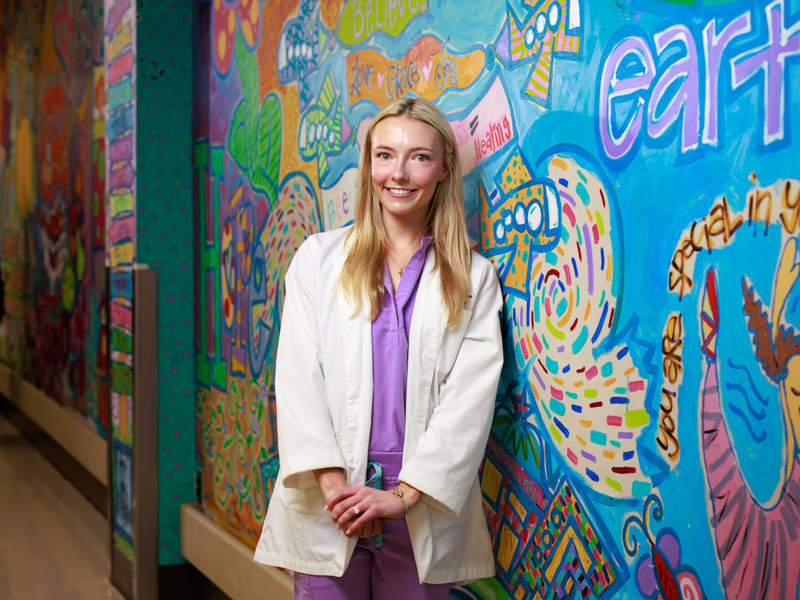
To Virginia Kate Gammon, her grandmother was “Vivi” – short for “Virginia” – a nickname that also announced a vivid, vivacious artist who held sway in her granddaughter’s life.
To Gammon, she was the gracious presence who treated her to art lessons and milkshakes, a moving spirit who donated her knowledge to children, a charmer with a “Magic Pen” that summoned the imaginative spark from those privileged to sit at her feet.
On Commencement Day in May, Gammon will become Dr. Virginia Kate Gammon, a physician who will draw on her learning from medical school at the University of Mississippi Medical Center and on the lessons gained from her grandmother, applying them to the way she treats her patients.
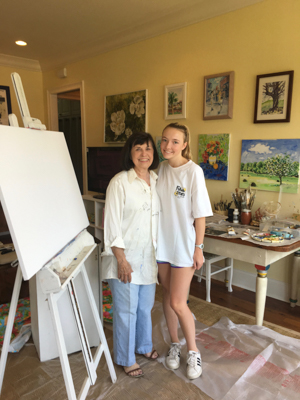
“Vivi inspired my creativity every single day,” Gammon said, “and in everything I did, teaching me to think outside the box; that’s something I won’t be afraid to do in medicine.”
An artist in her own right, Gammon discovered a few years ago a “way to give back to my surrounding arts community”: The Mosaic. It’s also a way to honor the memory of the artist who means the most to her.
A service project of the UMMC chapter of the Alpha Omega Alpha Honor Medical Society, The Mosaic is an anthology of visual and written compositions from those who work, train and study at the Medical Center.
A few years ago, it faltered during COVID, but Gammon has helped bring back this outlet for artistic souls who need to think about something other than science, medicine, budgets and buildings.
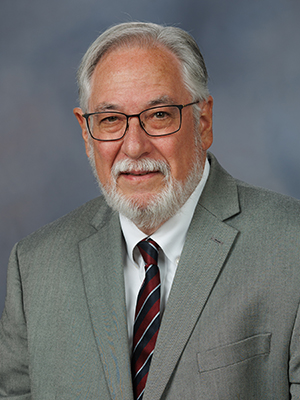
“Creative outlets in the arts and humanities are important for everyone in health care,” said Dr. Ralph Didlake, a retired surgeon and former UMMC associate vice chancellor for academic affairs. Under Didlake’s direction, the UMMC Center for Bioethics and Medical Humanities provided seed money for The Mosaic’s first issue.
The act of creation, Didlake said, “helps remind us of the humanity of what we do.”
The idea for the arts journal sprang from Dr. Scott Rodgers, associate vice chancellor for academic affairs and AOA’s former faculty advisor; he was inspired by an analogous publication from the Vanderbilt School of Medicine when he was one of its deans.
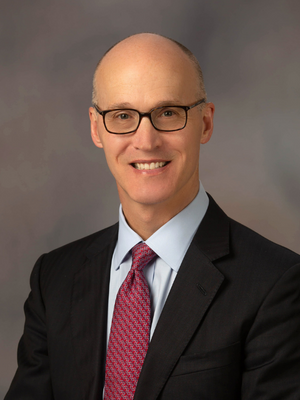
“We wanted The Mosaic to be from students, faculty, and staff across all UMMC schools and hospitals,” Rodgers said. “We were very proud of it, believing it reflected the strengths of our entire community.”
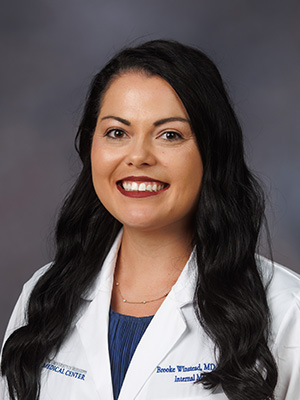
A few years ago, Dr. Brooke Long Winstead, a UMMC internal medicine resident who was a student at the time, “brought it back to everyone’s awareness – by having it printed as a hard copy,” said Dr. Calvin Thigpen, professor of medicine and faculty councilor for The Mosaic.
Dr. J. Mark Reed, an accomplished photographer and photo illustrator who electrified The Mosaic’s pages from its early editions, is one of many contributors whose numbers don’t surprise him.
“Many medical students set aside their other talents to chase after the healing art of medicine,” said Reed, professor of otolaryngology-head and neck surgery. “Medicine is like having an insatiable thirst – you have to quench it.”
But future doctors who also have a thirst for singing, writing, painting need a way to channel their creativity, he said. “If others like what we’ve done, that’s just a bonus. I think, for the most part, art in medicine is for our own healing.”
If so, then The Mosaic offers a kind of treatment center. It certainly does for Gammon, editor of the compendium’s soon-to-come sixth edition. “Sometimes, I just need to refill my cup,” she said.
Gammon discovered she had a cup very early. She grew up in Madison, down the street from her grandparents, Patrick and Virginia Thomas – an accomplished watercolorist who helped open the Madison Center for the Arts.
Also known as “Gin,” she gave free art lessons to children in a class called “the Magic Pen.” “The idea was to let your hand take control,” Gammon said. Thoughts and feelings guide the pen, allowing it to move freely across the paper –like magic.
Afternoons with her namesake also seemed charmed. After school, Virginia Thomas nourished her granddaughter’s sweet tooth with Frosties from Wendy’s and fed her impulse to create.
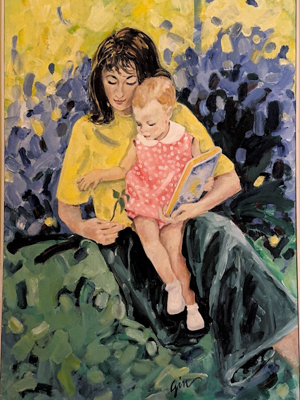
“Vivi was an active member of the artists' community in Taos, New Mexico, and attended summer workshops there,” Gammon said.
“Because of Vivi, it became an annual destination for our extended family; we’d drive 18 hours to Taos every Christmas to spend time together out West. Vivi loved traveling and exploring new places to paint; she loved an adventure.”
Gammon also took art lessons in high school, at St. Andrew’s Episcopal, where she edited the yearbook. In her first year of college, she and Vivi worked together on artwork for her dorm. And, throughout her college years, Gammon continued to paint.
She was still in college when she lost her grandmother. It was the summer of 2020; a few months later, she lost her grandfather. In the space left by Vivi’s absence, Gammon remained devoted to “staying creative.”
As a medical student, she discovered a new place where her artwork could live: The Mosaic was requesting submissions. The request came in an email from AOA, which would eventually induct her as a member.
At one point, though, she learned that The Mosaic had suspended publication.
“Unfortunately, during the pandemic, The Mosaic had been disrupted from its original form,” said Dr. Robert Wasson, an internist at Duke University Medical Center and a 2025 graduate of the School of Medicine.
“Virginia Kate was instrumental in this project to reinvigorate it,” said Wasson, former AOA chapter president. “She and her team did a fantastic job collecting dozens of submissions from around campus including both literary and visual arts pieces to publish a full-length journal.”
Gammon “is the ideal person to capture the creativity, the variety and the humanity of what we all do as a community in the field of medicine,” Thigpen said.
For last year’s 2025 Mosaic redux, Gammon estimates she reached 80% of the essayists, poets, artists and photographers whose contributions had landed in The Mosaic void. As editor, she offered to include them in the new edition.
“They were so happy,” she said. The Mosaic, now a digital publication, included entries from artist Virginia Kate Gammon: photographs of Colorado’s Twin Owls rock formation and a drawing titled “Gin.”

Of the 32 contributors, more than 20 were medical students. The others included physicians, residents, faculty and advanced-degree candidates from the schools of Population Health and Health Related Professions.
“It was mind-blowing to find out that I’m surrounded by so many truly creative people,” Gammon said. “Art brings people together. It unifies them. It’s like small pieces of colored stone or glass joined to create one image.”
The Mosaic staff is working on the 2026 edition; deadline for entries is Friday.
It’s safe to say that at least one of the pieces composing the whole will be from an artist who stays true to lessons learned from her grandmother and who keeps alive the magic.
The Mosaic is accepting submissionsas attachments emailed to ummc.mosaic1@gmail.com. For details, email vgammon@umc.edu.