


Department of Pathology marks 70 years behind the lens
Editor’s Note: To commemorate the University of Mississippi Medical Center’s 70th anniversary, we will feature a series of stories throughout the year on the original School of Medicine departments established in 1955.
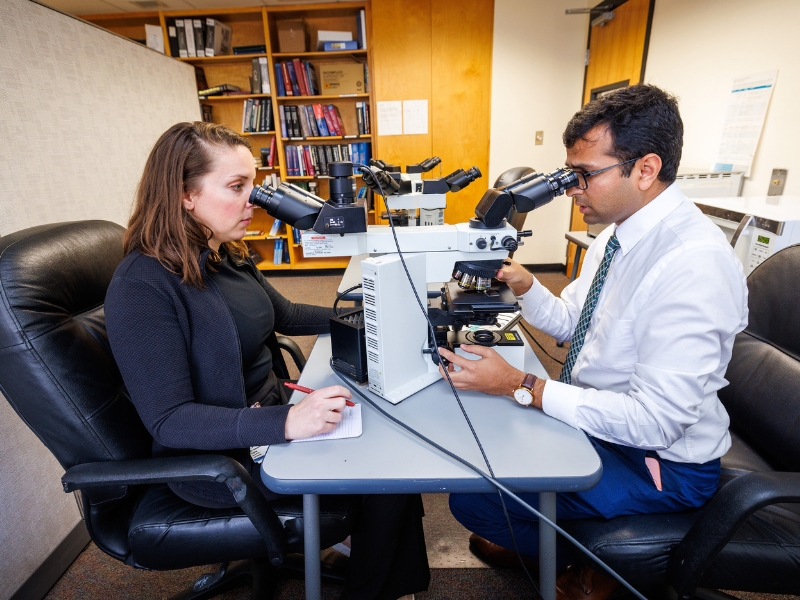
For pathologists, each tissue sample viewed under a microscope is part of a detective story. Unlocking mysteries behind a patient’s symptoms or confirming conditions are part of each solution to each mystery posed under the lens.
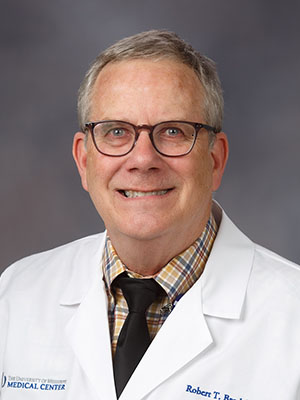
“Pathologists play a key role in finding answers for patients,” said Dr. Robert Brodell, chair of the Department of Pathology at the University of Mississippi Medical Center. “In fact, the concept of ‘finding answers’ has become the tag line for the department. We’re the ones working behind the scenes to tie basic science to the clinic and bring knowledge to life for our medical students and research what we find for future patients.”
The department’s team of 20 pathologists, including researchers, 15 residents and one fellow analyze such questions each time they look at a piece of tissue to diagnose a cancer, report a clinical lab result showing anemia, assess if an organ is appropriate for a transplant patient to avoid rejection, ensure compatible blood transfusions when necessary, identify drugs in a comatose patient in the emergency room or perform an autopsy to determine a cause of death.
The tools of the job in pathology can also act as the clipboards and checklists of health care, Brodell said, as they blaze pathways to better care down the road for all.
“We’re also quality control experts,” he said. “We need to predict possible mistakes and prevent them before they happen as we analyze hundreds of thousands of blood samples and tens of thousands of tissue samples in a year.”
A history dating back more than a century
The department traces its history further back than the opening of the Jackson campus in 1955.
A number of notable physicians served as professors of pathology at the medical school beginning in 1903, when the School of Medicine was established at the Oxford campus. A history of the department authored in 2023 for its newsletter by Dr. Robert E. Lewis, emeritus professor, noted Dr. James Bell Bullitt was named the first professor of pathology by Dean Waller S. Leathers. Among others who were pathology professors before 1955 were Dr. Paul R. Cannon, later a chairman of pathology at the University of Chicago; virologist Dr. Ernest W. Goodpasture, later a chairman of pathology and dean of the School of Medicine at Vanderbilt University; and Dr. James R. Dawson Jr., who also chaired pathology at the University of Minnesota Medical School.
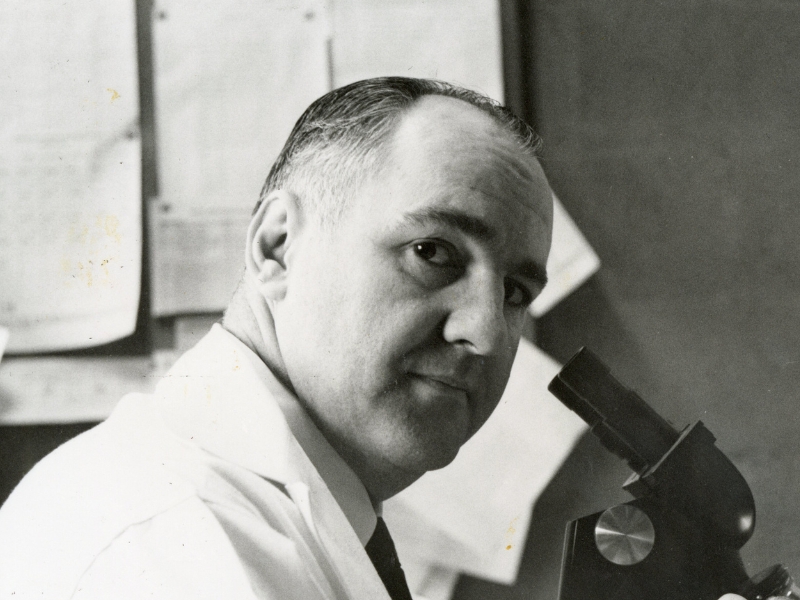
Dr. William V. Hare was chair when the Jackson campus was established, having already headed the department in Oxford since the late 1940s, Lewis noted. In 1959, its next chair, Dr. Joel G. Brunson, began a tenure that ran to 1977, along the way co-editing a textbook of pathology, Concepts of Disease, with Dr. Edward Gall.
Pathology increased its size and scope in the 1980s and 1990s, computerizing and modernizing its service and residency programs and securing federal funding for collaborations on kidney research, among other areas. The department developed its first dermatopathology service under Dr. Janice Lage, chair from 2012 to 2016. The service was directed by current chair Dr. Robert Brodell, who stepped down as chair of dermatology in 2022 to accept the chairmanship of pathology.
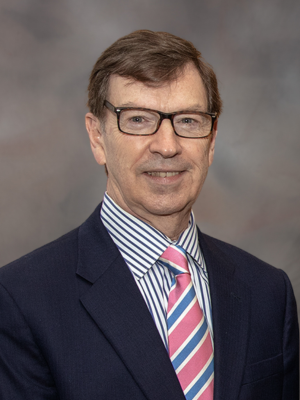
“Brodell's focus has been on hiring top-notch fellowship trained subspecialists from around the United States and developing a high-functioning culture based on transparency, trust and team-based care,” Lewis noted.
Each day, each case a challenge for residents and a joy for educators
The fast pace of daily life as seen through the lens of microscopes in the pathology resident room seems to suit first-year resident Dr. Samantha Payton just fine.

“I can start previewing biopsies in surgical pathology at about 6 a.m. and it’s a blur until a break at about 11,” said Payton, who came to UMMC after earning a degree in osteopathic medicine at William Carey University. “It’s a fluid, dynamic schedule. You make it your own.”
Residents assist coordinators in the behind-the-scenes work of patient care by generating clinical histories, analyzing small tissues for size, shape, texture and any abnormalities (known as “grossing”), examining slides and diagnosing and signing out cases to attending physicians.
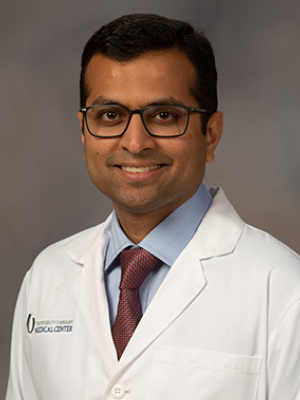
“The four residents we take each year are an integral part of our overall team,” said Dr. Masood Hassan, assistant professor of pathology and a resident program director. “We value their training and education as a main priority in our daily work and life balance.”
What most patients and loved ones know as “waiting on lab results” is often part of a rapid-fire succession of samples pathologists and assisting residents must analyze without error. It’s work that requires a specific skill set and focus unique in students such as Payton.
“I took an exceptional pathology course in medical school, then did a rotation in cytopathology,” she said. “Studying the pathology was fun – I didn’t get bored. It was magic. It hit me in the bones. I didn’t get flustered. I wanted more of it coming at me. I couldn’t get enough of it. It is indeed gratifying to watch students progress to being a resident, and then a practicing physician and colleague.
“At the end of the day, I have energy and I’m not drained at all. As a resident, I feel privileged to be able to go home and say I did something so cool today. And I can know everything I’m doing directly impacts patient care. Right now, I’m considering a cytopathology fellowship when I’m done with my current residency.”
It’s a level of energy educators in pathology at UMMC can appreciate in their own roles.
“For decades, we’ve been deeply invested in the education of medical students, residents and fellows,” said Dr. William Daley, professor of pathology and director of clinical pathology in the department. He has also directed coursework for second-year medical students for the past 20 years. “I can attest to the time and attention to detail needed to run an organized course and maximize learning for our students.”
Challenges met with ingenuity amid COVID pandemic
The normal rules of careful scientific analysis and procedure were already out the window for UMMC pathologists before COVID-19 reached Mississippi in early March 2020.
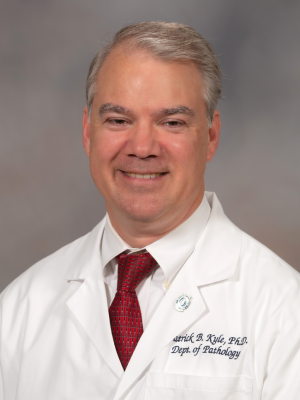
“Most laboratory testing requires four months to a year for validation to ensure the test works correctly and to evaluate precision, sensitivity and those sorts of things,” said Dr. Patrick Kyle, director of clinical chemistry and toxicology labs. “Obviously, we didn’t have that kind of time with the COVID-19 pandemic.”
Response to the pandemic meant pulling together its own staff, plus those from the research arenas, biochemistry and pharmacology in order to test about 180 patients a day by late March – a number that was dwarfed by the end of spring.
“That was our capacity when we began testing on March 26 using rtPCR, which is a very sensitive and specific test,” Kyle said. “The test replicated the actual viral RNA and to a measurable signal. We built upon that testing by adding another such test in our molecular diagnostics lab. By April 20, we were up to 630 tests a day. Since no other area hospital had rtPCR testing online, we began getting requests from outside institutions and, thanks to the Department of Pharmacology letting us use an automated extraction device that extracted the RNA amino acid chains, we were able to have test results back to patients in less than a day. And after a year of starting COVID testing here at UMMC, we had increased our capacity to 2,500 specimens a day.”
Five years on, and the department is stronger for having endured some of the most pressure-packed moments of many of its staffers’ careers, Kyle said.
“The communication increased between the various lab sections,” he said. “We recognize the importance of each other as a health care team. Everybody has their special place and a valuable job to do.”