


UMMC School of Medicine grows class size to address physician shortage

Mississippi continues to face a growing physician shortage, particularly in underserved and rural communities. To help address the issue and meet the state's increasing health care workforce needs, the University of Mississippi Medical Center School of Medicine is expanding its class size for the upcoming fall semester.
This fall, 175 students will begin their medical education, marking the eighth consecutive year of enrollment growth for the School of Medicine.
"As the School of Medicine increases its class size, it demonstrates its commitment to the health of our state. Every physician matters, and we need more of them, particularly in rural and underserved areas,” said Dr. Scott Rodgers, associate vice chancellor for academic affairs. “Our excellent faculty throughout our hospitals, clinics and classrooms, along with our superb leadership team in the School of Medicine, stand ready to welcome the students and provide them with an optimal learning experience,"
Dr. Loretta Jackson-Williams, vice dean of the School of Medicine, said the expansion is limited not by classroom capacity, but by the need to have clinical training opportunities across Mississippi.
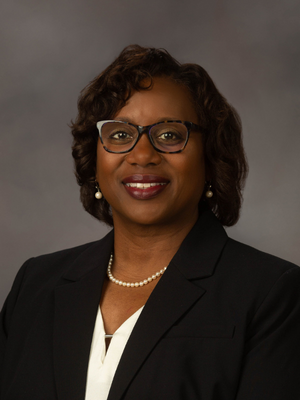
“We must be thoughtful about increases because once students get through medical school, they must complete a residency. Our goal is to make sure we have a robust physician workforce for the state. In order to do that, we need to ensure we have robust residency positions and training opportunities.”
More physicians are choosing to work part-time in pursuit of work-life balance, which affects the overall availability of providers in the workforce.
“If you also have competing family demands, then balancing that requires something that you give up. So what do you do?,” said Jackson-Williams. “You must truncate how much you give to your profession. If you truncate how much you give to your profession, then you are not practicing full-time. If you are not practicing full-time, then I can’t count you as a full-time physician in the workforce.”
The length of time needed to educate and train future physicians also plays a significant role in the school's decision to expand enrollment. By the time students complete a four-year bachelor's degree, four years of medical school and 3-7 years of residency training, the state's health care workforce needs may look quite different.
“Before a resident is eligible to sit for their specialty board and practice independently, which would be the completion of residency. You are committing to at least 12 years,” said Jackson-Williams. “So, the process takes a while for us to see its results.”
Jackson-Williams said increasing enrollment is necessary as the practice of medicine continues to evolve. The goal is to learn how to balance and refine the health care team because that is how medicine is practiced today to care for patients.
Another factor contributing to the School of Medicine's growth is the changing structure of medical practice. Jackson-Williams said state leaders are seeing fewer physicians choose independent or small-group practices, while more are joining corporate practices, private equity-backed organizations, hospitals and universities.
Jackson-Williams said there are many factors that influence physicians' choice to practice, and many find independent practice increasingly difficult to manage alongside the demands of patient care and administrative responsibilities.
Currently, the only entry-level residency program the University of Mississippi Medical Center does not offer is physical medicine and rehabilitation. “We hope to have that program up and running soon, further expanding training opportunities for future physicians and helping meet Mississippi's evolving health care needs,” she said.