


UMMC delivers life-saving transplant during system outage

Late one evening, Wade Watts received the call he had been waiting for: a donor liver was available. He and his wife, Sara, had to be at the hospital the next morning.
“My transplant coordinator, Anna, called around 7 the night before surgery,” Wade said. “I thought she was calling to change my labwork time, which I thought was odd given it was after her normal working hours. Instead, she told me they had found a match and to be at hospital admissions at 8 a.m. the next day for surgery.
“I immediately had two reactions. The first was I physically froze to the point she had to ask was I okay. She reassured me this is what we’ve been waiting on and what a wonderful thing was about to happen. The second was I had a flood of thoughts about how many people have been praying for this, how me and my family had wanted this for what seemed like forever, and about the donor’s family grieving for the loss of their love one who had left behind a gift to me so that I could continue my life. I will never forget that call and will be forever grateful to have received it.”
After hugs and kisses as their kids left for school, the Madison couple arrived at the University of Mississippi Medical Center early the next morning, preparing for a surgery that would likely save Wade’s life.
By that evening, Feb. 18, Watts was headed to the operating room for a liver transplant.
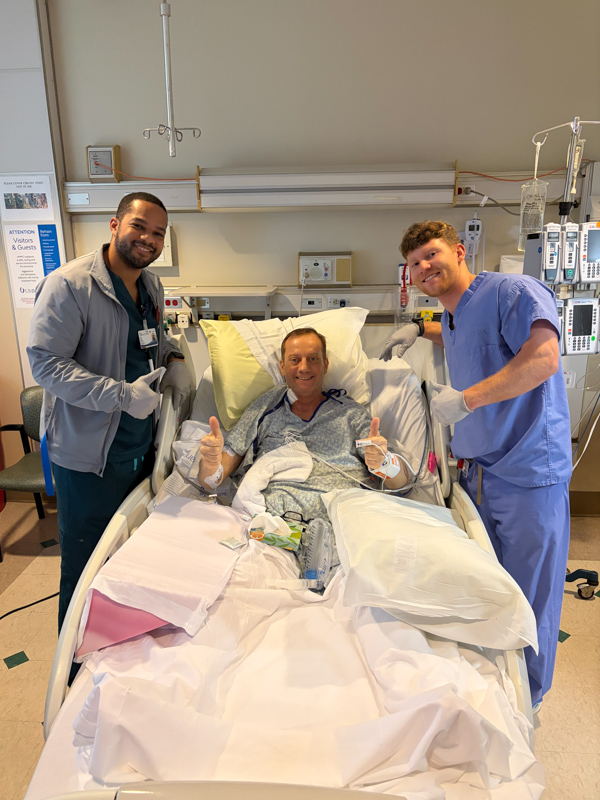
“It was about 1:30 a.m. when Dr. Anderson came out to the SICU waiting room where I waited with three of my best girlfriends,” Sara said. “He told me Wade was doing great and seemed to have a ‘very happy liver.’”
What neither the Watts family nor their care team fully realized yet was that, while the surgery was underway, UMMC’s electronic systems were beginning to go dark.
Within hours, employees across the hospital realized that phones and electronic medical records were unavailable. What some thought to be a scheduled outage for routine maintenance would later be confirmed as the first signs of a cyberattack.
But for the Watts family, care never stalled.
Watts had been battling primary biliary cholangitis that progressed to cirrhosis and liver failure. The diagnosis came after he had already overcome another unexpected health challenge.
In 2022, he was T-boned in a car accident when another driver ran a red light. While evaluating him after the crash, doctors performed a CT scan that revealed thyroid cancer. He later underwent a total neck dissection and radioactive iodine treatment at MD Anderson.
“It seems a lifetime ago now, even though it was only three and a half years ago,” he said. “It was a very different experience than my liver transplant. I went from a car accident, to an ER visit, to discovery of the cancer and how invasive it had become without symptoms, to surgery at MD Anderson within a few weeks.
“The aftermath was initially shocking with the amount of trauma caused by removing my thyroid, 36 lymph nodes and the attached cancer from my trachea and right side vocal cord. I wasn’t able to speak for several months, but with the help of speech therapy, regained my ability to talk and carry on with a small deficit that not everyone can detect. So they were two different experiences — both very challenging — but with the right people seeing over my care, I’ve come out of both as well as I could expect.”
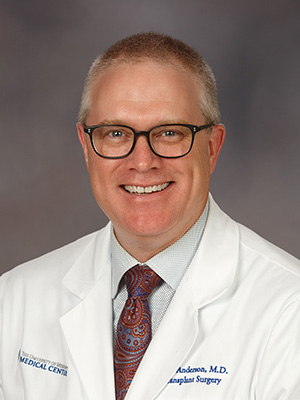
"Transplant guidelines typically require patients with cancer outside of the liver to be cancer-free for five years before being put on the transplant list, but there is variation based on cancer type, stage and behavior," said Dr. Christopher Anderson, the James D. Hardy professor and chair of the Department of Surgery and chief of the Division of Transplant and Hepatobiliary Surgery.
"With Watt’s cancer, it would be ideal to wait longer, but not absolutely necessary. As his liver function deteriorated further, it was clear that the benefit of transplant outweighed the risk of thyroid cancer recurrence. In November 2025, he developed septic shock and was admitted to the ICU. He recovered, but his liver function continued to decline at a faster pace and with that his position on the transplant waiting list rose."
Three months later, the call came.
After 24 years caring for patients at UMMC, including 21 years in the Children’s of Mississippi Pediatric Intensive Care Unit and the last three in ambulatory surgery, Sara knows the hospital well. But during her husband’s hospitalization, she was not just a nurse, but a wife watching the person she loves fight for his life.
Soon after Wade arrived in the surgical ICU after his operation, Sara began to notice something unusual.
Staff members were quietly asking one another questions in the hallway.
“My EPIC is down. Is yours? Is anyone’s EPIC working?”
The phones weren’t working either.
Providers quickly realized they would have to transition to downtime procedures, which includes charting by hand.
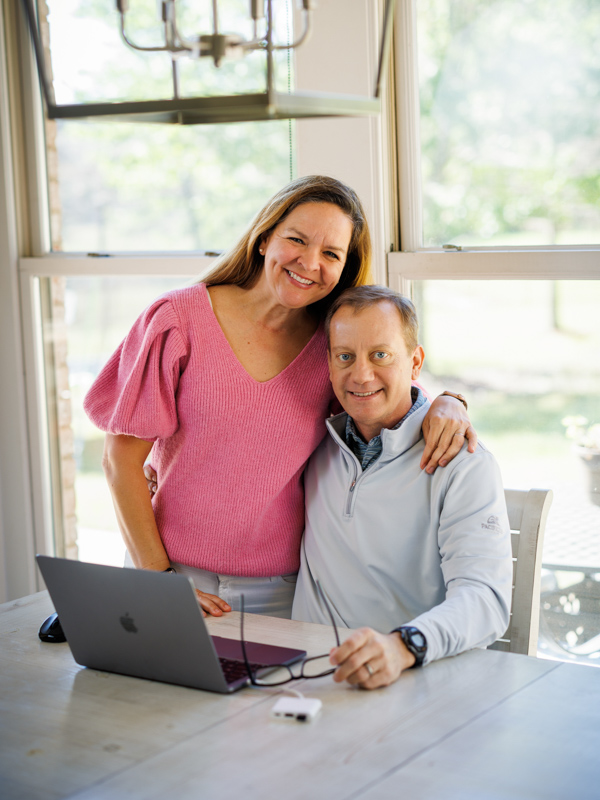
“They were trying to give him blood products and needed to scan them,” Sara said. “Without delay, they manually checked everything and started the blood.”
As the night went on, paper charts began appearing outside the ICU room. Lab results were stapled together and posted on the door. Nurses wrote updates on dry-erase boards.
Yet inside the room, nothing was amiss.
“While my nurse-self knew it was chaotic and difficult to keep up, my wife-self never saw a delay in care,” she said.
Across the hospital, physicians, nurses and pharmacists quickly shifted into protocols designed to keep patient care moving smoothly even when electronic systems are unavailable.
"We have short down-times not infrequently, so our staff, residents, nurses are all trained on how to handle down-times," said Anderson. "However, this was significantly different than the shorter outages. It was pretty inspiring to me to see literally everyone at UMMC rise to the occasion. We adapted and I never had a concern that patients were not getting great care. It was no-doubt harder and not something that any of us want to do again, but everyone just focused on patient care which made it a good environment."
Medication administration, lab ordering and documentation all required additional verification steps.
“The nurses were so incredibly diligent about checking, rechecking and triple-checking medications,” Sara said. “Their patient load remained the same, but they had all the extra paperwork too.” Even under pressure, she said staff never let the stress show.
“They walked into our room with smiles and kindness every single time,” she said.
Wade’s recovery progressed quickly. He was expected to be hospitalized for about 10 days but was discharged after just six. Doctors felt comfortable sending him home a few days early, Sara said, knowing she had the clinical experience to help manage his recovery.
“What we noticed the most about our stay was the overall love and care we received,” Sara said. “Computers, technology, phones and charts can be taken from us, but the genuine love and vast knowledge necessary to take care of people doesn’t change.
“At no point did I feel afraid for his care. Despite an extremely stressful week, I never felt like things were out of control.”