


That’s My Job: Milk lab technicians
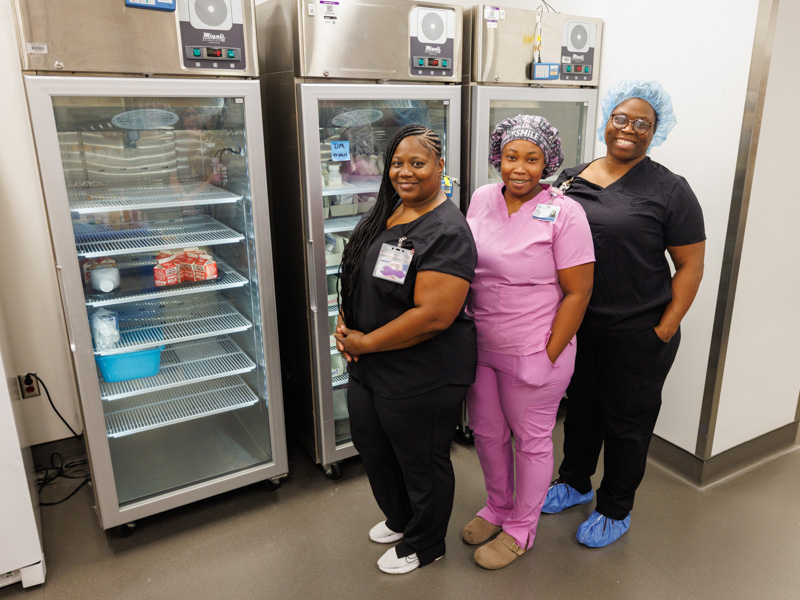
Every day, milk lab technicians at Children’s of Mississippi prepare feedings in a sterile environment tailored to the nutritional needs of hospitalized infants and children, carefully following provider orders to help patients get the nutrition they need to grow and thrive.
The team prepares breast milk, formula and other nutritional products for patients throughout the children’s hospital, averaging about eight bottles per patient each day and approximately 490 bottles overall. Depending on a patient’s needs, technicians may also prepare specialized recipes for babies with certain medical conditions.
Milk lab technicians receive diet orders through integration of the hospital’s electronic milk tracking software and electronic health record system. Physicians and nurse practitioners enter orders based on each patient’s nutritional needs, and technicians use those instructions to prepare the appropriate feedings.
“Oftentimes our milk lab team has to mix those products differently than how they are provided by the manufacturer,” said Alicon Johnson, executive director of health systems operations. “They take that milk and provide additives to make it more calorically dense, which provides more calories to the baby if needed.”
After preparation, each feeding is labeled for the appropriate patient and delivered to designated patient care areas throughout the day.
A typical day begins around 7 a.m., when technicians print a report listing patients and their current feeding orders. The team reviews the report to determine whether there’s an adequate supply of milk for patients.
Latoya Spann, a milk lab technician at Children’s, said the team prints the report two to three times throughout the day to keep up with orders and changes in patients’ needs.
“We go through that, check it and make sure that we have available milk for moms, or if we have donor orders or ready-to-feed orders in the house,” Spann said.
The afternoon report, typically printed around 1 p.m., reflects updated orders from providers and helps technicians plan the next round of feedings. For babies receiving feedings every three hours, the goal is to account for eight feedings throughout the day.
Keeping track of milk supplies is another important part of the job. Technicians monitor how much breast milk is available and communicate with nurses and mothers when supplies are running low. Nurses, dietitians, physicians and nurse practitioners also contact the milk lab when a patient's feeding order changes so technicians can prepare additional milk or adjust the amount being sent.
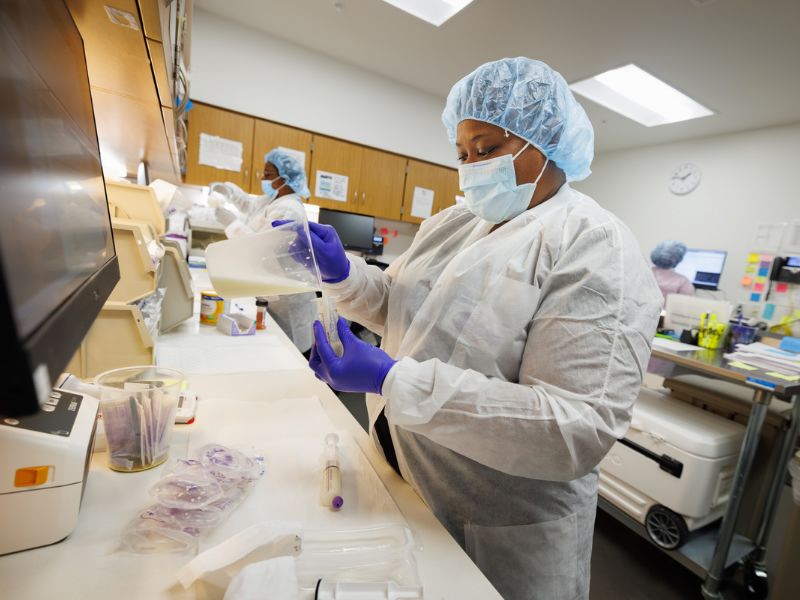
“Making sure we have enough milk to feed the babies” requires the most attention to detail, Spann said. “The goal for that day is to make sure that our sheet tells us that each one of our babies will be able to feed.”
Some patients require more specialized preparation. Jekerria Boykin, a milk lab technician who joined the team in March, said she has gained experience preparing special.
“The thing I enjoy most is making milk for the babies,” said Boykin, a milk lab technician at Children’s. “I've gotten to experience different things, including making special recipes for some of the babies with metabolic conditions.”
Each day brings a new set of responsibilities, Boykin said, and technicians must be ready to focus on the patients and feedings assigned to them.
Communication is essential to the process. Technicians work with nurses who communicate updated orders and consult dietitians when they need guidance on unfamiliar mixing instructions. Dietitians also visit the lab to answer questions and help ensure needed formulas and supplies are available.
The work requires diligence, attention to detail and integrity. Each feeding must be prepared according to the appropriate instructions and delivered to the correct patient.
Sissy Frost, who previously oversaw the milk lab as director of clinical nutrition, said leading the department was an honor because of its impact on the children it serves. The team provides nutrition that helps babies and children grow and thrive, she said.
As Johnson settles into her new leadership role, she is focused on supporting the technicians and recognizing the specialized work they do.
For Spann, the importance of that work is reflected in the babies who depend on the team to receive their feedings on schedule.
“Our role is to help make sure that these babies are growing properly and they're being fed safely,” she said. “I think our role is very important when it comes to the babies.”
The milk lab performs work that few people outside the hospital may ever see, but its role is essential to helping ensure infants and children receive feedings prepared to meet their individual needs.