


MEWI research update
Research at the Myrlie Evers-Williams Institute for the Elimination of Health Disparities (MEWI) highlights how science and community partnerships can address complex health challenges, from preeclampsia and maternal health to cardiovascular outcomes shaped by patients’ experiences in the health care system.
Study explores trust, care experiences and cardiovascular health equity

Dr. Osayande Agbonlahor
Dr. Osayande Agbonlahor, assistant professor in the Department of Preventive Medicine at the UMMC John D. Bower School of Population Health, in partnership with the Myrlie Evers-Williams Institute for the Elimination of Health Disparities, is conducting a community-engaged study aimed at improving cardiovascular outcomes for Black American adults in Mississippi.
Centered at the EversCare Clinic, the project examines how structural and interpersonal factors, including health care discrimination, poor quality of care, medical mistrust and health care provider bias, may be associated with cardiovascular health outcomes. The study focuses on Black American adults enrolled in the EversCare Clinic and will collect information related to cardiovascular health, social determinants of health, experiences with the health care system and patient-provider trust.
“This work is about listening to patients and communities, understanding the experiences that shape trust in health care and using that knowledge to improve cardiovascular outcomes,” Agbonlahor said. “By partnering with MEWI, EversCare and community advisors, we hope to identify practical strategies that support more respectful, responsive and equitable care.”
A key component of the project is the Physician-Patient and Community Advisory Board, which brings together members of the MEWI Community Advisory Board and the UMMC Adult Hospital Patient and Family Advisory Council. The advisory board will provide input on recruitment, messaging and the translation of research findings for the community.
The study will use surveys, focus groups and interviews to better understand the relationship between health care experiences and cardiovascular health. Findings from the pilot project are intended to inform the design of a future randomized controlled trial focused on strengthening trust between patients and health care providers, reducing exposure to poor quality care and improving cardiovascular outcomes for Black American adults.
Through this work, UMMC, MEWI and community partners are seeking real-world solutions that support stronger patient-provider relationships and advance cardiovascular health equity across Mississippi.
Mississippi Preeclampsia Collaborative Center advances maternal health research
The Mississippi Preeclampsia Collaborative Center at the University of Mississippi Medical Center is leading a multidisciplinary effort to better understand, prevent and improve outcomes related to preeclampsia, a serious pregnancy complication marked by high blood pressure that can threaten the health of both mothers and babies.
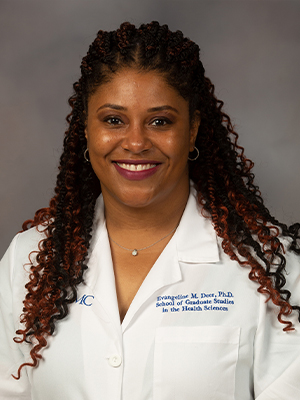
The collaborative effort brings together the UMMC Department of Pharmacology and Toxicology, home to the Mississippi Preeclampsia Collaborative Center, the Department of OB/Gyn, Maternal Fetal Medicine Division with community partners including the EversCare Clinic. Together, UMMC researchers Dr. Babbette LaMarca, Dr. Kenneth Butler, and Dr. Evangeline Deer are leading efforts through the Mississippi Preeclamspia Collaborative Center to provide education to Mississippi women about the consequences of hypertensive disorders during pregnancy. The Center is funded by NIH to support four specific research projects led by Drs. LaMarca, Denise Corenlius, Kedra Wallace and Lorena Amaral – each investigating how preeclampsia affects women during pregnancy and postpartum. The work also examines the potential long-term effects of pregnancy complications on children’s health and development.

“Preeclampsia does not always end when pregnancy ends,” Deer said. “Through this collaborative work, we hope to better understand the short- and long-term effects of hypertensive disorders of pregnancy so we can improve care, strengthen prevention efforts and support healthier outcomes for mothers and children across Mississippi.”
A key component of the research is biobanking, which allows researchers to safely collect and store biological samples for future study. These samples help scientists examine inflammation, blood vessel function, immune responses and other biological changes linked to preeclampsia. The goal is to identify better ways to predict risk earlier, improve treatment options and reduce long-term health complications such as heart disease and stroke and dementia.
In addition to advancing scientific research, the center is committed to community education and outreach across Mississippi. Through awareness campaigns, educational programs and partnerships with clinics and healthcare providers, the Mississippi Preeclampsia Collaborative Center aims to improve maternal health outcomes and increase awareness of the warning signs and long-term effects of hypertensive disorders of pregnancy.
In recognition of Preeclampsia Awareness Month, the Mississippi Preeclampsia Collaborative Center and the Myrlie Evers-Williams Institute for the Elimination of Health Disparities hosted a series of educational and community events May 18-20. Activities included a kickoff during UMMC Clinical Trials Day, educational outreach at Wiser Hospital focused on the signs, symptoms and long-term consequences of preeclampsia, and a community wellness walk at the Jackson Medical Mall. The events highlighted ongoing research efforts while connecting Mississippi women and families with information and resources designed to promote earlier recognition, timely care and improved maternal health outcomes.
This work represents an important step toward improving the health and well-being of mothers, babies and families across Mississippi.