


Staff spotlight: MEWI social worker Dr. Sherie Brock
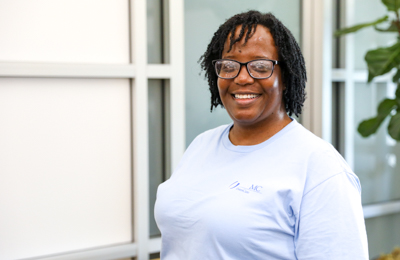
In this faculty spotlight, Dr. Sherie Brock reflects on her work as the licensed clinical social worker at the Myrlie Evers-Williams Institute (MEWI), her commitment to patient advocacy and the importance of supporting mental health with compassion, connection and care.
Q: Can you tell us a little about your role at UMMC and what inspired you to pursue social work?
A: I’ve been fortunate to work as a social worker at the University of Mississippi Medical Center since 2007. Over the years, I have served patients and families in different roles, which has only strengthened my passion for this field.
I am currently a Licensed Clinical Social Worker at the Myrlie Evers-Williams Institute for the Elimination of Health Disparities at the EversCare Clinic. I work directly with patients to help them overcome challenges such as food insecurity, housing, transportation, literacy and personal safety. I also connect them to resources that support their well-being.
Before this, I spent 10 years in transplant social work, helping patients and families navigate the emotional, educational and psychosocial aspects of the transplant process. Earlier in my career at UMMC, I worked in coordinated care, where I helped with discharge planning, crisis intervention and mental health services.
What inspired me to pursue social work was my passion for helping others feel heard, supported and empowered. I’ve always believed in advocating for people during tough times and helping them find the care and resources they need to improve their lives.
Q: You recently completed your Doctor of Social Work degree. What motivated you to continue your education after more than 20 years in the field?
A: After working in the social work field for more than 20 years, I wanted to keep learning both personally and professionally. My experience with people facing difficult situations showed me how important it is to stay current, creative and ready to advocate in new ways.
Pursuing my Doctor of Social Work degree gave me the opportunity to deepen my knowledge, strengthen my leadership skills and expand the impact I can make in health care and community-based settings.
It was also important for me to set an example of lifelong learning and show that it’s never too late to chase your goals or keep moving forward in your career.
Q: Since May is Mental Health Awareness Month, what message would you like to share with the community about mental health and seeking support?
A: Mental Health Awareness Month reminds us that mental health matters just as much as physical health, and no one should feel ashamed to ask for help.
Sometimes life can be overwhelming, and it’s OK not to have everything figured out. Reaching out for support – whether through counseling, talking with friends and family, joining support groups or using community resources – is a sign of strength, not weakness.
I encourage everyone to check in with themselves and others, show compassion and remember that healing and hope are possible when we support each other.
Q: What has been the most rewarding part of your work in health care and mental health?
A: What I find most rewarding about working in health care and mental health is being there for people during difficult times and helping them see their own strength.
Sometimes that means connecting patients and families with resources, supporting someone in a crisis or simply listening when they need it. I’ve seen how much compassion and support can matter.
It means a lot to know my work can improve someone’s health, quality of life and sense of hope.
Q: What does being part of the MEWI and UMMC community mean to you?
A: Being part of the Myrlie Evers-Williams Institute and the University of Mississippi Medical Center community connects me with a team that truly values compassion, service and advocacy for others.
I have the chance to support vulnerable groups while working with dedicated people who want to improve health and address the social challenges our patients face.
It feels rewarding to belong to a community that not only cares for people but also empowers individuals and families through support, education and real connections.