

Our Work
Community Collaboration and Partnership
Collaborations with the local and national communities against violence is vital to our work. Here is a look at some of our partnerships:
The Center for Disease Control and Prevention (CDC) Collaboration
The CDC reached out to the Mississippi Violence Research Center recently to brainstorm together in the fight to prevent violence. To further our conversation around specific project activities, items were drafted for feedback and in partnership, we built a list of persons to interview within the Jackson Metro area.
This list is based on items mentioned as being of considerable interest and potential utility toward advancing violence prevention in Jackson, including better understanding recent trends, enhancing data linkage activities, and advancing geospatial work.
Assessing Recent Trends and Epidemiologic Patterns
- Mortality and Emergency Department Data Trends
Description: These analyses will form the first section of the report and describe epidemiologic patterns in Jackson and Mississippi. Analyses will involve an investigation of time series trends as well as trends by county and ZIP code. Distribution of injuries will also be examined by healthcare facility and other characteristics. Where available, circumstance information of injuries will be described to inform prevention opportunities. Community-level Census data may be linked at the zip code to ED data, as described further below in geospatial section.
Resources Needed: As a funded NVDRS and AVERT state, CDC will plan to utilize NVDRS and AVERT data. Law enforcement data can also be included in analyses, if shared.
Enhancing Data Linkage for Violence Prevention
Description: The components below seek to advance a model and technical framework for enhanced data linkage to better understand patterns in assault-related injuries as well as inform treatment and prevention activities.
- EHR and EMS Data Linkage
Resources Needed: Access to both EHR and EMS data and a secure computing environment within the hospital network to conduct patient-level data linkage using patient identifiers. CDC team can write code in R or Python to conduct data linkage and describe trends from linked data that is of interest to Mississippi.
Notes: EMS data is a valuable contribution as it helps provide improved location data in the absence of hospital screening for precise location of violence. Linked EMS and EHR data also enable an improved understanding of a patient’s complete clinical trajectory and predictors of outcomes. - Hospital and Prevention Partner Data Linkage
Resources Needed: Data sharing agreement between community partners and UMMC to share and link data. Community-based organizations would need to be willing to share a limited set of information, such as patient name and service dates, with UMMC.
Notes: Pending agreement and access to data, CDC staff can conduct linkages to quantify the proportion of hospital patients receiving community services, helping to understand service reach. This linkage can also help explore the potential impact of receipt of services on health outcomes.
- Cardiff Model Project
Resources Needed: Access to police department data on the location of assaults and homicides at the address level or other small unit (block).
Notes: The Cardiff Model is a violence prevention strategy that combines and maps hospital and police data to better identify the geographic locations of violence. This is important as many assaults are not reported to law enforcement. The Cardiff Model also helps build partnerships between hospitals and law enforcement to discuss data and pursue collaborative prevention efforts. - Recidivism/Longitudinal Analysis
Resources Needed: Access to UMMC EHR data and a secure environment to conduct analyses in R or Python software.
Notes: Describing patterns in repeat incidents and long-term outcomes can help inform the delivery and timing of prevention programs.
Advancing Geospatial Capabilities
Description: Access to the above data sources will enable new information of the precise location of violent injuries, which can be used to advance an understanding of the geospatial characteristics of injuries.
- Spatial Analysis of Business Climate and Violent Incidents
Resources Needed: Data with precise location info from EMS data or police data, as described above
Notes: Precise location information will enable an examination of the built environment and including business environment near incidents. For example, a geospatial case control study comparing incident locations to matched controls can inform place-based strategies for prevention. - Neighborhood Characteristics and Violence
Resources Needed: Geospatial linkage with Census/ACS data as well as National Neighborhood Archive data can be performed at the ZIP code level using AVERT data or at the block group or census tract level using EMS data.
Notes: This linkage would help build a baseline understanding of neighborhood factors, such as poverty and economic climate, to help inform UMMC and community partners' economic support activities for violence prevention.
Consideration and continued discussion for all items is underway. The Cardiff Model discussion has taken place and MCVR is awaiting more information to decide if the model will work in conjunction with the study in proving to be an enhancement and if it will be effective for this violence prevention work.
There are ongoing interviews and collection of data to find what items are most effective to solve the equation in violence prevention in our greater Jackson area and ultimately around the state.
Consortium of Southeast Regional Violence Intervention Programs (CoSERV)
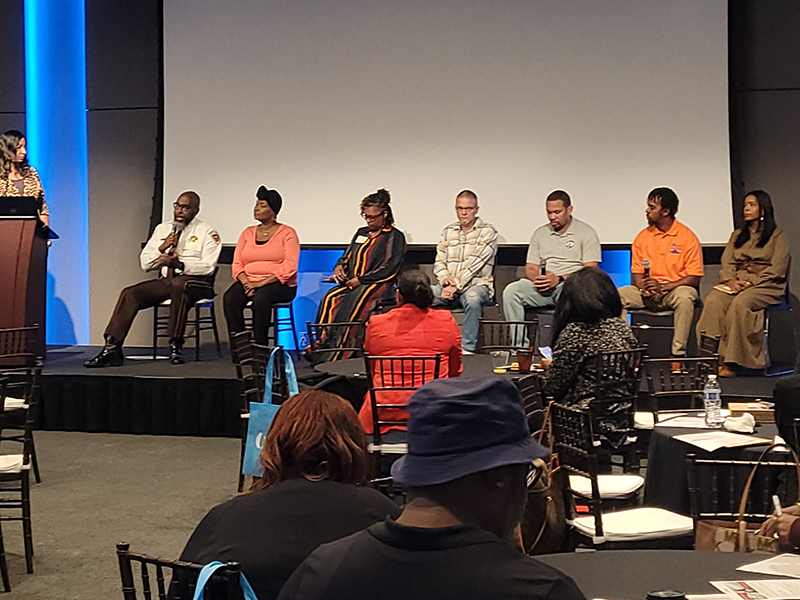
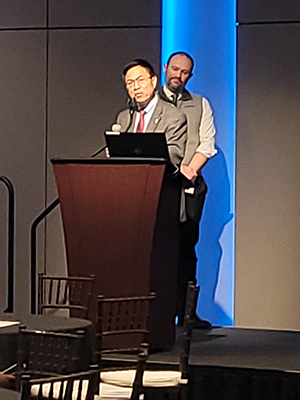
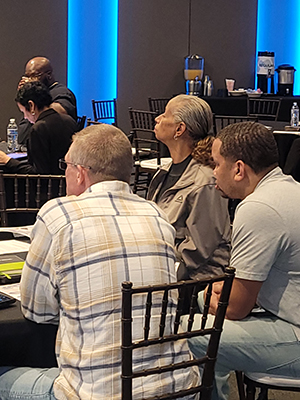
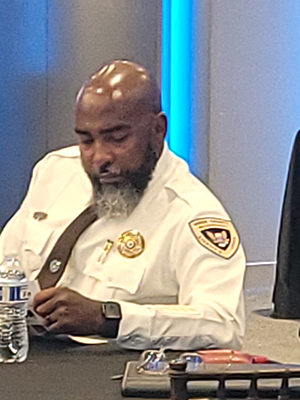
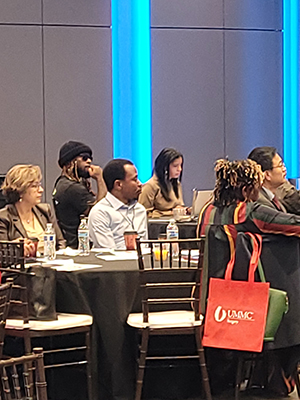
 The Mississippi Center for Violence via the Mississippi Injury Prevention Research project had the pleasure of partnering with the Department of Surgery to produce CoSERV this year at the Two Museums of Mississippi in downtown Jackson.
This consortium is a group of hospital-based and community-based violence intervention programs collaborating to address gun violence in the Southeast, where firearm homicides are disproportionately high.
- Mission: To develop and strengthen evidence-based strategies, support systems, and evaluation methods to reduce regional violence.
- Activities: Members share resources and information, and the group holds conferences to network and collaborate.
- Founding: The consortium was founded on a commitment to collaboration and the belief that fellowship and shared resources can help achieve violence reduction.
The agenda from the consortium follows the images from the program below.