


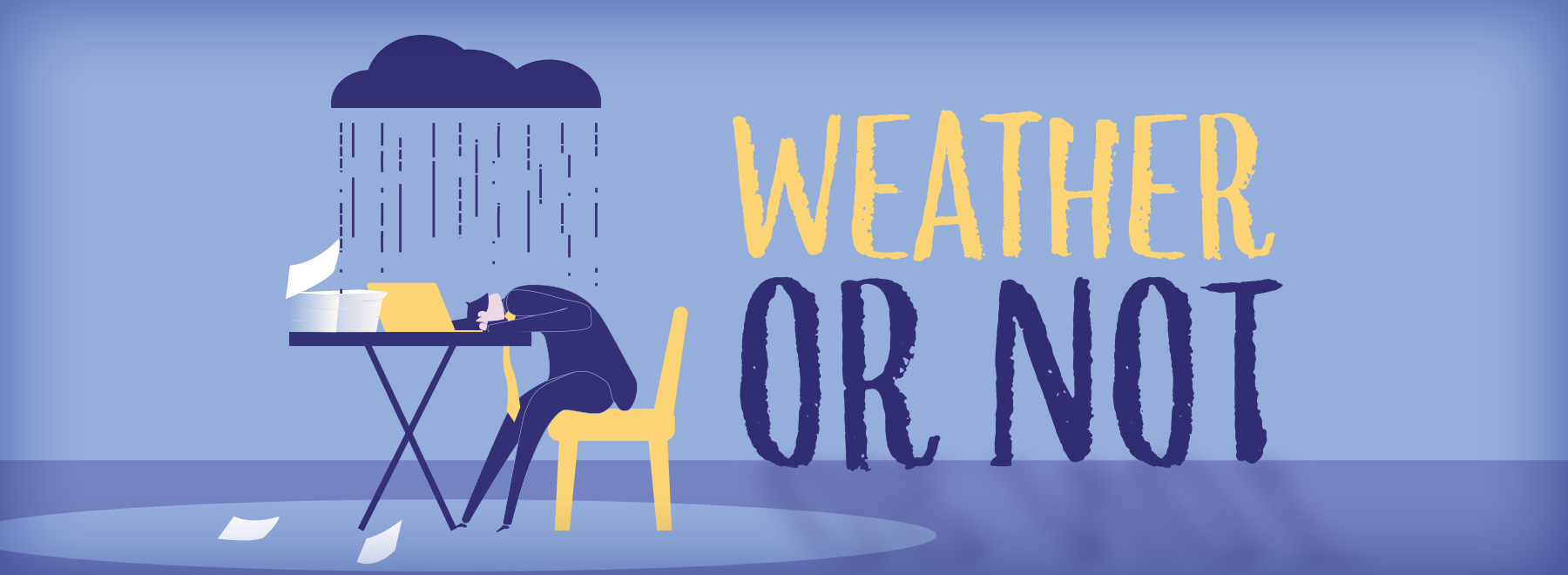
Rise early, sleep well, mental health experts say
It might not be as bad as rain on a wedding day or other bummers worthy of a ‘90s alt-pop tune, but wild swings in the weather can indeed bring on the blues.
Recent studies suggest variations in the weather can affect anxiety and depression symptoms in changes of just 9 degrees Fahrenheit over periods up to 40 days. With spring days in Mississippi often starting out downright cold in the morning but balmy by mid-afternoon, mental health specialists advise the basics of healthy living apply no matter the weather.

“The most basic advice is to focus on protecting those basics – keep a consistent sleep schedule, stay physically active, go outside when possible, stay hydrated and listen to your body if mood or anxiety symptoms get worse,” said Dr. Michael Collins, assistant professor and deputy vice chair of clinical affairs for psychiatry and human behavior at UMMC.
Typically, seasonal patterns of depression are thought of more often during the transition from warmer weather to colder weather later in the year, Collins said. Still, he added spring can prove to be a difficult transition as well.
“Changes in routine, allergies, severe weather concerns, sleep disruption and temperature swings can all add stress and make people feel more irritable, fatigued, restless or emotionally ‘off’,” Collins said. “If anxiety symptoms persist and clearly hamper daily functions, it should not be dismissed as ‘just the weather.’”
Sleep research has noted measurable changes in the way the body maintains a steady internal temperature, or thermoregulation, which in turn helps a person keep a typical sleep pattern.

“From a sleep perspective, rapid temperature changes – particularly during seasonal transitions – can disrupt sleep architecture by affecting our thermoregulation, which is a key component of how we fall asleep and stay asleep,” said Dr. Lais F. Berro, assistant professor of psychiatry and human behavior in the Division of Neurobiology and Behavior Research. “Warmer nighttime temperatures, for example, are consistently associated with poorer sleep quality and increased nighttime awakenings. Indirectly, this can contribute to irritability, reduced stress tolerance, and worsened mood.”
The twice-yearly changes in the clock to and from standard time and daylight saving time can affect mental and physical health, according to studies.
“The loss of an hour of sleep in spring with daylight saving time is associated with disturbed sleep, an increased tendency for fatal accidents and increases in the instance of heart attacks,” Berro said.
Sticking to reasonable sleep patterns and staying active can at least help people stay prepared for changes, versus sudden change, which can upset mental clarity.
“A key takeaway from the literature is that variability, rather than absolute weather conditions alone, may be especially important,” Berro said. “Sudden or unpredictable changes in weather seem to place greater demands on both physiological adaptation and psychological coping, which may help explain links to stress sensitivity and mood fluctuations.”
To speak with adult psychiatry specialists at UMMC or to schedule an appointment, call 601-984-6925 or visit here.
The above article appears in CONSULT, UMMC’s monthly e-newsletter sharing news about cutting-edge clinical and health science education advances and innovative biomedical research at the Medical Center and giving you tips and suggestions on how you and the people you love can live a healthier life. Click here and enter your email address to receive CONSULT free of charge. You may cancel at any time